
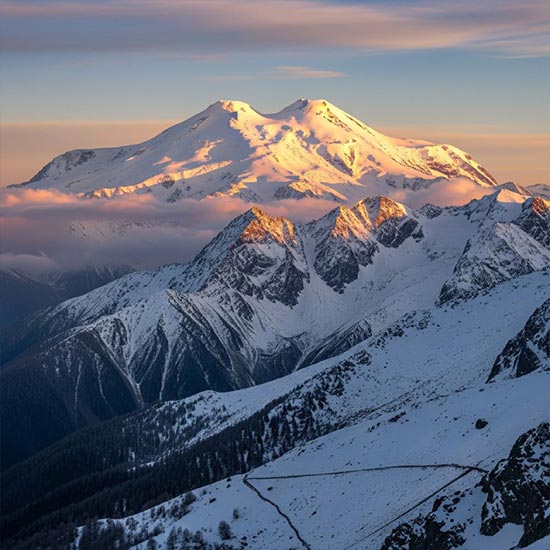
Conquering the Roof of Europe: An Adventure on Mount Elbrus, Russia
Have you ever gazed at a mountain and felt an irresistible pull to stand on its highest point? For many adventurers, that mountain is Mount Elbrus, Russia’s magnificent double-headed peak. Tucked away in the stunning Caucasus mountain range, Elbrus isn’t just the tallest mountain in Russia; it proudly holds the title of the highest peak in Europe. It’s a goal for many aspiring mountaineers, a crown jewel in the “Seven Summits” challenge, and a place of unparalleled natural beauty. If you’re seeking an adventure that tests your limits and rewards you with views that stretch to forever, then pack your bags – Elbrus is calling!
More Than Just a Mountain: A Journey to the Top
Mount Elbrus is far more than just a large rock formation. It’s a dormant volcano, a glaciated behemoth, and a cultural landmark. Reaching its summit is a profound personal achievement, but the journey itself is an equally rich experience. From the vibrant mountain culture of the local communities to the camaraderie with fellow climbers, every step on Elbrus is part of a larger story. It’s not just about reaching the top; it’s about the effort, the stunning scenery, and the unique challenges you overcome along the way.
Elbrus at a Glance: Key Facts for Aspiring Climbers
Before we delve deeper, let’s get some quick facts about this impressive mountain:
- Elevation: West Summit: 5,642 meters (18,510 ft); East Summit: 5,621 meters (18,442 ft)
- Location: Caucasus Mountains, Kabardino-Balkaria and Karachay-Cherkessia, Russia, near the border with Georgia.
- Type: Dormant stratovolcano.
- First Ascent: 1829 (East Summit by Khillar Khachirov); 1874 (West Summit by F. Crauford Grove expedition).
- Prominence: 4,741 meters (15,554 ft), making it one of the world’s most prominent peaks.
These numbers hint at the grandeur of Elbrus, but they barely scratch the surface of what it feels like to actually be there.
A Volcanic Giant: How Elbrus Rose to Prominence
To truly appreciate Elbrus, it helps to understand its fiery origins. This isn’t just a folded mountain; it’s a volcano, a fact that gives it its distinctive shape and towering height.
The Formation of a Double-Headed Peak
Mount Elbrus is a dormant stratovolcano (also known as a composite volcano), meaning it’s built up over thousands of years from layers of hardened lava, ash, and volcanic rock. Its iconic twin cones, or “heads,” are the result of two distinct volcanic vents that erupted at different times, eventually coalescing into the magnificent mountain we see today. The west summit is slightly higher than the east, but both offer equally spectacular views. The last eruption is believed to have occurred around 50 AD, which, in geological terms, is relatively recent!
Still a Sleeping Giant? The Debate on Its Volcanic Activity
While officially classified as dormant, Elbrus isn’t entirely inactive. There are still signs of residual volcanic activity, such as hot springs in the area. Scientists continue to monitor the mountain, debating whether it’s truly “extinct” or simply a “sleeping giant” that could awaken in the distant future. This geological history contributes to the unique mineral composition of the soil and the distinctive landscape of the surrounding region.
Location, Location, Location: Gateway to the Caucasus
Elbrus is part of the Greater Caucasus mountain range, a formidable chain that stretches between the Black Sea and the Caspian Sea, forming a natural border between Europe and Asia. The region is known for its dramatic peaks, deep valleys, and diverse ecosystems. The Elbrus area specifically is often referred to as the Pri-Elbrusye National Park, a protected zone that showcases the raw beauty of the high mountains. Its location makes it a meeting point of cultures and a gateway to some of the most stunning landscapes on the continent.
Your Ascent to the Summit: Routes and Challenges
So, you want to climb Elbrus? Fantastic! While it’s often called a “trekking peak” because it doesn’t require technical climbing skills like rope work on vertical rock faces, don’t underestimate it. It’s a serious high-altitude endeavor that demands respect, preparation, and a healthy dose of determination.
The Classic South Route: A Path for Many
Most climbers opt for the South Route, which is considered the “standard” and less technically demanding path. This route is well-supported with infrastructure, including cable cars that whisk you up to higher altitudes, significantly reducing the initial trekking time.
Acclimatization: The Unsung Hero of a Successful Climb
No matter how fit you are, acclimatization is paramount on Elbrus. This involves spending several days at increasing altitudes to allow your body to adapt to the lower oxygen levels. A typical itinerary for the South Route includes 2-3 days of hiking to progressively higher points, returning to a lower camp for sleep. This process is crucial for preventing altitude sickness and maximizing your chances of a successful and safe summit bid. Believe me, you don’t want to rush this!
The “Barrel Huts” and Cable Cars: Modern Conveniences
The South Route benefits from modern conveniences that make the ascent more accessible. A series of cable cars takes climbers from the valley floor (around 2,350m) up to the Garabashi station (3,847m). From there, you can stay in rudimentary but cozy “Barrel Huts” (so named for their barrel-like shape) or other mountain refuges. There’s even a chairlift that can take you a bit higher, to around 3,900m, further shortening the ascent to the higher camps and the summit push.
Summit Day: The Ultimate Test
Summit day is the grand finale and begins very early, often around 2-3 AM, to utilize the firm morning snow and avoid afternoon weather changes. From the highest huts (around 3,800m), it’s a long, challenging climb. Many climbers opt for a snowcat (a tracked vehicle) to take them to 4,700m, saving several hours of walking. From there, it’s a grueling but rewarding hike up steep snow and ice slopes, navigating around the “Pastukhov Rocks,” and finally traversing between the two summits to reach the higher West Summit. The views from the top, often above the clouds, are simply breathtaking.
The North Route: For the More Adventurous
For those seeking a wilder, more remote experience, the North Route offers a stark contrast. It’s significantly less developed, with no cable cars or permanent huts beyond basic camping. It requires more self-sufficiency, often involves carrying heavier packs, and typically takes longer. While still a non-technical climb, it presents greater logistical challenges and requires more advanced mountaineering skills. It’s a fantastic option if you prefer solitude and a more traditional expedition feel.
Echoes of History: Elbrus’s Past and Present
Elbrus isn’t just a natural wonder; it has also played a role in human history, from early explorations to wartime struggles.
Early Ascents and Mountaineering Feats
The first recorded ascent of the East Summit was in 1829 by Khillar Khachirov, a local Karachay guide, as part of a Russian army expedition. The higher West Summit wasn’t conquered until 1874 by a British expedition led by F. Crauford Grove. These early climbs were formidable undertakings, requiring immense courage and resilience in an era without modern gear or detailed maps.
World War II on the Slopes: A Forgotten Front
Perhaps one of the most surprising chapters in Elbrus’s history is its role in World War II. In 1942, during the Battle of the Caucasus, German mountain troops of the Edelweiss division actually reached and planted Nazi flags on both summits. This was more of a propaganda stunt than a strategic victory, but it remains a chilling testament to the lengths to which soldiers were pushed. The harsh conditions and the high altitude took a heavy toll on both sides.
Local Traditions: The Karachay-Balkar People
The foothills of Elbrus are home to the Karachay-Balkar people, Turkic-speaking ethnic groups with a rich cultural heritage deeply tied to the mountains. They are traditionally pastoralists, known for their hospitality and resilience. Exploring the villages and experiencing their culture, perhaps trying some local cuisine like khychiny (flatbreads with various fillings), adds another layer of depth to your Elbrus adventure.
Not Just for Climbers: Exploring the Elbrus Region
Even if you’re not planning a summit bid, the Pri-Elbrusye region offers a wealth of activities for all types of travelers.
Skiing and Snowboarding: Winter Sports Paradise
In winter, the slopes of Elbrus transform into a popular skiing and snowboarding destination. The cable cars provide access to extensive terrain, from groomed pistes to challenging off-piste areas. The views from the slopes, with the twin peaks of Elbrus towering above, are simply spectacular. It’s a much more affordable and less crowded option compared to many European resorts.
Hiking and Trekking: Summer Trails and Stunning Vistas
During the summer, the lower and mid-altitudes of the Elbrus region offer incredible opportunities for hiking and trekking. You can explore picturesque valleys, discover hidden waterfalls, and enjoy panoramic views without the commitment of a full summit attempt. Trails range from easy walks to multi-day treks, catering to all fitness levels. The vibrant alpine meadows in bloom are a sight to behold.
Mineral Waters and Spa Towns: Relaxation Below the Peaks
The Caucasus region is famous for its natural mineral water springs, and the towns in the foothills of Elbrus, like Kislovodsk, are renowned spa resorts. After a long hike or a challenging climb, there’s nothing quite like relaxing in a traditional banya (Russian sauna) or enjoying the therapeutic properties of the local mineral waters.
Ascending Safely: Essential Tips for Your Expedition
Mount Elbrus is a serious undertaking. Proper preparation and respect for the mountain are crucial for a safe and successful trip.
Gear, Guides, and Insurance: Your Safety Net
- Gear: You’ll need specialized mountaineering gear, including crampons, an ice axe, a helmet, warm layers, a good quality sleeping bag, and robust mountaineering boots. Most outfitters offer gear rental.
- Guides: While it’s possible to climb Elbrus independently, hiring a local, certified mountain guide is highly recommended, especially if you’re not an experienced high-altitude climber. They provide essential local knowledge, safety expertise, and logistical support.
- Insurance: Comprehensive travel and mountaineering insurance that covers high-altitude rescue and medical evacuation is absolutely non-negotiable. Don’t leave home without it.
Remember, the mountain will always be there. Turning back due to weather, illness, or fatigue is a sign of good judgment, not failure.
Mount Elbrus: A Challenge, A Reward, A Memory
Mount Elbrus isn’t just a peak to be conquered; it’s an experience to be savored. It’s a journey that demands physical and mental fortitude but repays you with unparalleled beauty, a profound sense of accomplishment, and memories that will last a lifetime. Whether you’re standing on its snowy summit, carving tracks down its slopes, or simply admiring its majestic presence from a verdant valley, Elbrus leaves an indelible mark on all who encounter it. Are you ready to answer the call of the Roof of Europe?
Frequently Asked Questions About Climbing Mount Elbrus
1. Is Mount Elbrus a dangerous mountain to climb?
While Elbrus is often called a “trekking peak” due to its non-technical nature, it is still a serious high-altitude mountain and can be dangerous. The primary risks are altitude sickness, rapid weather changes (blizzards, whiteouts), crevasses, and strong winds. Proper acclimatization, good gear, a reliable guide, and appropriate insurance are essential for minimizing risks.
2. How long does it take to climb Mount Elbrus?
A typical guided expedition for the South Route takes between 7 to 9 days, including travel to the region and several days of acclimatization hikes before the summit attempt. The actual summit day is usually a very long day, often 10-14 hours round trip from the highest huts.
3. What is the best time of year to climb Mount Elbrus?
The most popular and generally safest climbing season is from mid-July to mid-August, when the weather is most stable, and temperatures are milder. Early September can also be good, but weather can become more unpredictable. Spring and late autumn are generally not recommended due to harsher conditions and heavier snow.
4. Do I need prior climbing experience to attempt Elbrus?
While you don’t need technical mountaineering experience like rock climbing, you should have excellent physical fitness, experience with multi-day strenuous hikes, and be comfortable walking on snow and ice with crampons and an ice axe (which you’ll learn to use during the climb). High-altitude trekking experience is a significant advantage.
5. What gear is essential for climbing Mount Elbrus?
Essential gear includes sturdy mountaineering boots, crampons, an ice axe, a helmet, warm layered clothing (down jacket, waterproof shell), warm gloves and hat, sunglasses, sunscreen, a headlamp, a backpack, and a good sleeping bag (if staying in huts without bedding). Most of these items can be rented in the Elbrus region.