The Trans-Siberian Railway: An Epic Journey Across Russia
Imagine embarking on a single train journey that spans nearly a third of the globe, crossing continents, time zones, and countless landscapes. Does that sound like the kind of adventure you’ve been dreaming of? Then let me introduce you to the Trans-Siberian Railway, Russia’s legendary steel artery that stretches from the bustling heart of Moscow all the way to the Pacific port of Vladivostok. This isn’t just a mode of transport; it’s a profound odyssey, a chance to witness the vastness and diversity of Russia firsthand, and an unforgettable chapter in anyone’s travel story.
More Than Just a Train Ride: A Grand Adventure
The Trans-Siberian isn’t merely about getting from point A to point B. It’s about the journey itself – the endless birch forests giving way to vast steppes, the majestic rivers, the charming wooden villages, and the grand, historic cities that punctuate the route. It’s about the quiet rhythm of the train, the camaraderie with fellow passengers, and the sheer wonder of watching the world slowly roll by your window. If you’re looking for a trip that challenges your perceptions and offers a truly immersive cultural experience, this iconic railway delivers.
What Awaits You on the World’s Longest Railway?
At over 9,289 kilometers (5,772 miles) long, the main Trans-Siberian route holds the record as the longest railway line in the world. It crosses 8 time zones, a testament to the sheer scale of the Russian landmass. But it’s not just the distance that’s impressive; it’s the rich tapestry of experiences awaiting you: from sipping hot tea in a traditional podstakannik (tea glass holder) to sharing stories with locals, or gazing out at the breathtaking beauty of Lake Baikal. Every moment on this train is an opportunity for discovery.
Forging a Nation: The Story Behind the Steel Rails
The creation of the Trans-Siberian Railway was more than just an engineering feat; it was a nation-building project of immense proportions. It connected the European heartland of Russia with its vast, resource-rich, but largely undeveloped Siberian and Far Eastern territories.
From Dream to Reality: Tsar Alexander III’s Vision
The idea of a railway stretching across Siberia had been floated for decades, but it was Tsar Alexander III who finally pushed the project forward in the late 19th century. He famously declared, “The construction of the great Siberian railway, which is to connect the abundance of the Siberian regions with the network of internal railways, I consider to be my sacred duty.” The official start of construction was in 1891, with the future Tsar Nicholas II (then Tsarevich) laying the first stone in Vladivostok. This monumental undertaking was seen as crucial for Russia’s economic development, strategic defense, and for asserting its influence in the Far East.
Building the Impossible: Challenges and Triumphs
Building a railway across such a vast and often unforgiving landscape presented immense challenges. Imagine laying tracks across frozen swamps, through dense forests, over mighty rivers like the Ob and Yenisei, and around the deep, rocky shores of Lake Baikal. Thousands of laborers, including convicts, soldiers, and peasants, worked in incredibly harsh conditions, facing extreme temperatures, disease, and logistical nightmares. Despite these difficulties, the main line was largely completed by 1904, a testament to human perseverance and engineering ingenuity. It was a triumph that quite literally reshaped the map of Russia.
Choosing Your Path: Three Iconic Journeys
When people talk about “The Trans-Siberian,” they often mean the main route to Vladivostok, but there are actually three primary long-distance routes that offer distinct experiences.
The Trans-Siberian: Moscow to Vladivostok
This is the classic, original route. Stretching for over 9,289 km (5,772 miles), it connects the Russian capital with its major Pacific port. The journey typically takes about 7 days without stopping, but most travelers choose to break it up with stops in fascinating cities along the way.
Through the Heart of Siberia
As you travel this route, you’ll witness the incredible diversity of Russia. You’ll see the European plains gradually transform into the vast, ancient forests of Siberia, cross the Ural Mountains (the traditional boundary between Europe and Asia), and skirt the shores of the majestic Lake Baikal. The train passes through major cities like Yekaterinburg, Novosibirsk, Irkutsk, and Khabarovsk, each offering unique insights into Russian history and culture. It’s a journey that really makes you appreciate the sheer scale of the country.
The Trans-Mongolian: From Russia to Beijing via Mongolia
For those looking for an international flavor, the Trans-Mongolian Railway is an incredibly popular choice. This route branches off the main Trans-Siberian line at Ulan-Ude (just east of Lake Baikal) and heads south through Mongolia, eventually ending in Beijing, China.
Steppes, Nomads, and the Gobi Desert
This journey is a feast for the senses. After leaving the Russian forests, you’ll enter the wide-open, undulating steppes of Mongolia, often spotting nomadic Gers (yurts) and herds of horses. The train makes a stop in Ulaanbaatar, Mongolia’s capital, giving you a chance to explore a vibrant mix of traditional and modern culture. As you continue south, you’ll cross the legendary Gobi Desert, a truly unforgettable landscape. The border crossing between Mongolia and China is a unique experience, as the train’s bogies (wheelsets) are changed to accommodate the different track gauges—a fascinating mechanical ballet in the middle of nowhere!
The Trans-Manchurian: Russia to Beijing via China
The third major international route is the Trans-Manchurian Railway. This route also branches off the main Trans-Siberian line, but further east than the Trans-Mongolian, at Tarskaya, and heads directly into northeastern China (Manchuria) before reaching Beijing.
A Path Through Manchuria’s Landscapes
While perhaps less famous than the Trans-Mongolian, the Trans-Manchurian offers a rich journey through different landscapes and cultures. You’ll traverse the historical region of Manchuria, experiencing a part of China that has its own unique character, influenced by its proximity to Russia and Korea. This route typically involves fewer border formalities than the Trans-Mongolian, as the bogie change happens at the Russian-Chinese border, not between two different gauges.
Your Rolling Home: The Experience of Train Travel
The Trans-Siberian is as much about the journey inside the train as it is about the world outside your window. It’s a unique social experience.
Compartments, Companions, and Culinary Delights
Trains on the Trans-Siberian typically offer different classes of travel:
- First Class (SV/Luxe): Usually two-berth private compartments, offering more space and comfort.
- Second Class (Kupe): Four-berth compartments, which are the most popular choice for travelers and a great way to meet people.
- Third Class (Platskartny): Open-plan carriages with berths along the aisle, offering the most authentic (and crowded) local experience.
No matter which class you choose, you’ll quickly settle into the rhythm of train life. Days are spent reading, playing cards, gazing out the window, and, most importantly, chatting with your fellow passengers. Language barriers often melt away with gestures, shared food, and a smile.
The Provodnitsa: Your Guardian Angel of the Rails
Every carriage has a provodnitsa (female attendant) or provodnik (male attendant) who is essentially your host on the train. They check tickets, keep the carriage clean, provide bedding, sell snacks and drinks, and keep the all-important samovar (hot water dispenser) constantly filled for tea, coffee, and instant noodles. They are the heart of the train, often stern but always helpful, and quickly become a familiar and comforting presence.
Dining Cars and Shared Meals: A Cultural Exchange
Most long-distance trains have a dining car, offering a menu of Russian staples, though prices can be a bit higher. However, a big part of the Trans-Siberian experience is bringing your own food or buying it from vendors on the platforms during longer stops. Sharing food with your compartment mates or other passengers is a common and wonderful way to break the ice and learn about different cultures. Instant noodles, bread, cheese, and cured meats are staples!
Window to the World: What You’ll See Along the Way
The landscape outside your window is constantly changing, offering a visual encyclopedia of Russia’s geography.
Key Stops: Cities and Natural Wonders
While the journey itself is the star, making strategic stops allows you to immerse yourself in key regions.
Lake Baikal: The Pearl of Siberia
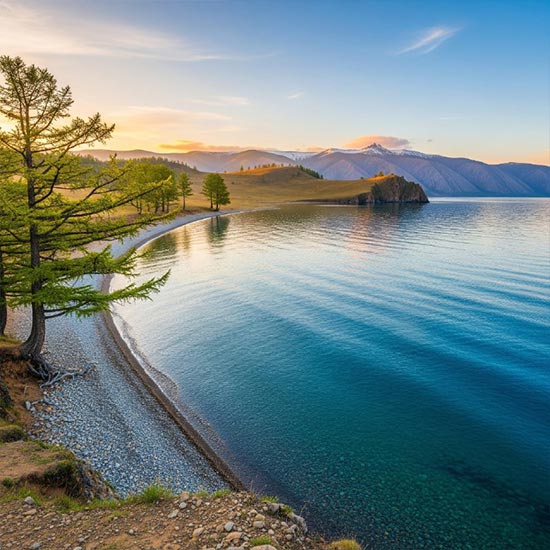
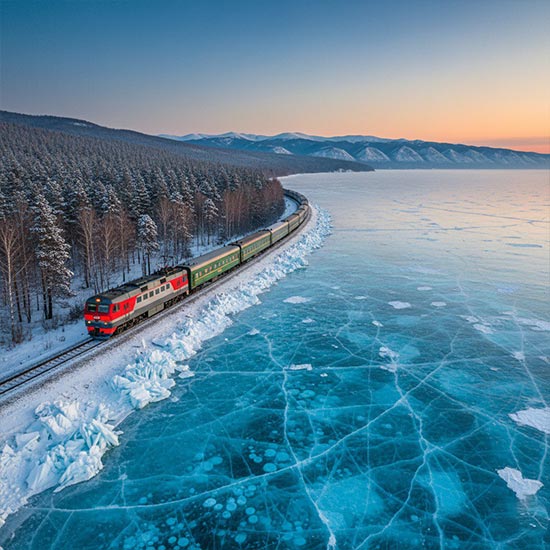
Undoubtedly one of the most breathtaking sights on the Trans-Siberian is Lake Baikal, the world’s deepest and oldest freshwater lake. The train often runs right alongside its shores for hours, offering unparalleled views of its crystal-clear waters, especially in summer, or its stunning, ice-sculpted expanse in winter. Many travelers choose to stop in nearby Irkutsk to explore the lake more thoroughly, perhaps visiting Olkhon Island or taking a dip.
Irkutsk: The ‘Paris of Siberia’
Often called the “Paris of Siberia,” Irkutsk is a popular stopover city. With its elegant wooden architecture, Decembrist houses (former homes of exiled Russian aristocrats), and vibrant cultural scene, it offers a fascinating glimpse into Siberian urban life. It’s also the main gateway to Lake Baikal.
Beyond the Major Cities: The Fabric of Russian Life
Beyond the well-known stops, the train passes through countless smaller towns and villages. These offer glimpses of everyday Russian life that are far removed from the bustling metropolises. You’ll see locals going about their daily routines, children playing, and the quiet rhythm of rural existence unfold before your eyes. It’s a truly authentic view of the country.
Tips for an Unforgettable Trans-Siberian Journey
Ready to start planning? Here are a few pointers to help make your Trans-Siberian adventure as smooth and enjoyable as possible.
Visa, Tickets, and Packing Essentials
- Visas: This is crucial! Ensure you have all necessary visas for Russia, Mongolia, and China (if traveling on the Trans-Mongolian or Trans-Manchurian routes) well in advance.
- Tickets: You can book tickets online through various agencies or directly with Russian Railways. Booking well in advance, especially for popular summer months, is highly recommended. Consider breaking your journey into segments if you plan to stop.
- Packing: Pack layers of clothing, comfortable shoes, entertainment (books, games, fully charged devices), a power bank, a travel mug, instant coffee/tea, snacks, and a small towel. Don’t forget earplugs and an eye mask!
When to Go: Seasons and Scenery
- Summer (June-August): The most popular time, with warmer weather, lush green landscapes, and longer daylight hours. However, it can also be crowded and more expensive.
- Winter (December-March): Offers a truly magical, snow-covered landscape and the stunning frozen Lake Baikal. It’s much colder, but the trains are warm, and there are fewer tourists.
- Spring/Autumn (April-May, September-November): These shoulder seasons offer beautiful transitional scenery, fewer crowds, and milder temperatures.
The Trans-Siberian: A Journey That Stays With You
The Trans-Siberian Railway is more than just a trip; it’s an experience that transcends typical tourism. It’s an immersion into the vast heart of Russia, a journey through landscapes that stretch beyond the horizon, and an opportunity to connect with people from all walks of life. It teaches you patience, resilience, and the beauty of slowing down. By the time you reach your final destination, you won’t just have seen Russia; you’ll have felt its pulse, understood its scale, and become a part of its enduring legend.
Frequently Asked Questions About the Trans-Siberian Railway
1. How long is the Trans-Siberian Railway journey?
The full journey from Moscow to Vladivostok on the classic Trans-Siberian route is approximately 9,289 kilometers (5,772 miles) long and takes about 7 days without stops. However, most travelers choose to break up the journey with several stops along the way.
2. Is the Trans-Siberian Railway safe for solo travelers?
Yes, the Trans-Siberian Railway is generally considered safe for solo travelers, including women. The provodnitsas (carriage attendants) maintain order, and fellow passengers are often friendly and helpful. Like any travel, it’s wise to be aware of your surroundings and keep your valuables secure.
3. What is the best class to travel in on the Trans-Siberian?
Second class (Kupe), which features 4-berth compartments, is generally considered the best balance of comfort, cost, and social experience. First class (SV/Luxe) offers more privacy with 2-berth compartments, while third class (Platskartny) is the most budget-friendly but also the least private, with open-plan berths.
4. Can I get off the train and explore cities along the way?
Absolutely! Most travelers plan their Trans-Siberian journey with multiple stopovers. You simply buy separate tickets for each segment of your journey (e.g., Moscow to Irkutsk, then Irkutsk to Ulan-Ude). This allows you to explore cities and sights like Lake Baikal at your own pace before continuing on the next train.
5. What should I pack for a Trans-Siberian trip?
Essential items include comfortable clothing (layers are key!), toiletries, a travel pillow, earplugs and an eye mask, entertainment (books, games), a portable power bank, instant coffee/tea/noodles, snacks, and a reusable water bottle. Don’t forget your passport, visas, and printed tickets!