Leo Tolstoy: A Literary Giant’s Epic Journey from War to Wisdom
Have you ever read a book that felt less like a story and more like a universe? A book so vast, so rich with human experience, that it completely changes the way you see the world? That’s the magic of Leo Tolstoy. He was more than just a writer; he was a a visionary, a philosopher, and a a moral provocateur who wrestled with the biggest questions of life, death, and everything in between. He gave us sprawling epics, intimate psychological portraits, and a philosophical legacy that continues to shape our understanding of peace, faith, and the human soul. Let’s dive into the fascinating, complex, and often contradictory life of this literary titan.
The Formative Years: From Aristocrat to Author
Every genius has a beginning, and Tolstoy’s story is a a remarkable one. Born into the Russian aristocracy, he had a childhood of privilege but also of profound loss, an experience that would shape his art and his worldview.
A Troubled Youth and a Search for Purpose
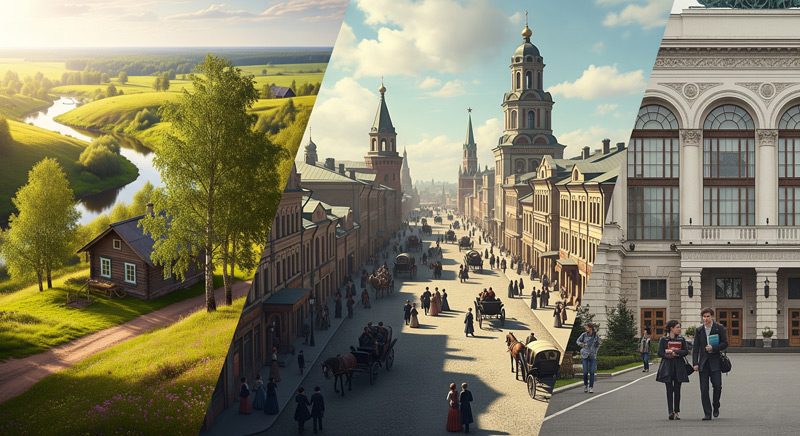
Count Lev Nikolayevich Tolstoy was born in 1828 on the family estate of Yasnaya Polyana. He was the youngest of four brothers, and his life began with a series of tragedies. His mother died when he was just two years old, and his father passed away when he was nine. This early exposure to loss left a deep mark on him, fostering a a sense of introspection and a lifelong search for meaning. As a young man, he was a a bit of a wild child, indulging in gambling and a dissolute life in Moscow and Saint Petersburg. He was a student at Kazan University but left without a degree, feeling disillusioned with the formal academic system. This period of his life was marked by a deep sense of dissatisfaction, a feeling that would eventually drive him toward literature and a quest for a more authentic way of being. He was a a restless soul, searching for a home he couldn’t seem to find.
Family Roots and Early Education
Tolstoy’s family was one of the most prominent in Russia, with a noble lineage that stretched back centuries. He was raised by relatives after his parents’ deaths, and his early education was largely conducted by private tutors. He was fluent in several languages from a young age and was an avid reader, devouring the works of the great French and English authors. His early writing was an attempt to make sense of his own life, a way to explore his inner turmoil and his place in the world. He began a diary at the age of 18, a a practice he would continue for the rest of his life, providing us with a a raw, unfiltered look into the mind of a literary giant. It was a a private rehearsal for the grand narratives he would one day share with the world.
The Caucasus and the Crimean War: Finding a Voice
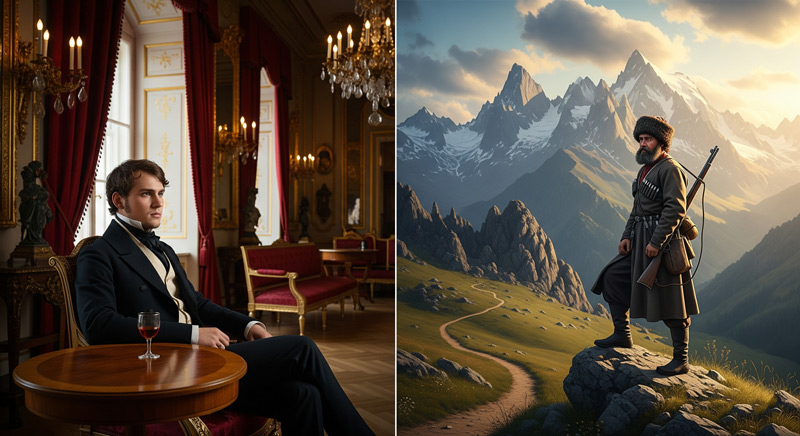
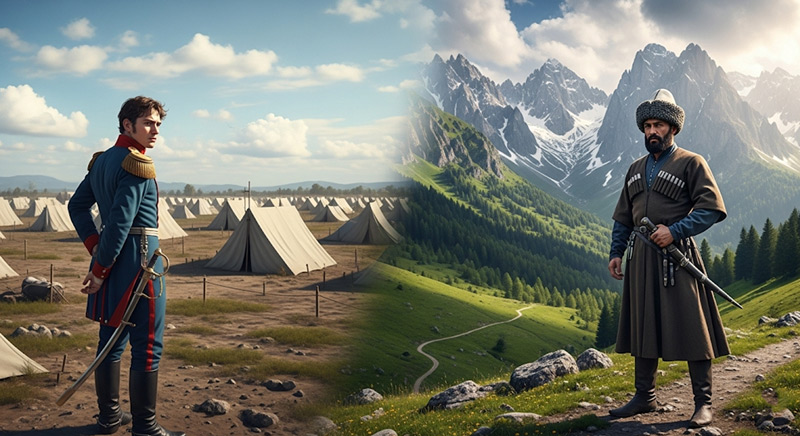
Seeking a change and an escape from his gambling debts, Tolstoy joined his older brother in the Caucasus Mountains in 1851. This experience was a a turning point for him, as it provided the raw material for his first published work, the semi-autobiographical novella Childhood. He was a a cadet in the army and later became an artillery officer during the Crimean War.
The Impact of Military Service on His Art
Tolstoy’s time in the military was a a transformative experience. He witnessed the brutality of war firsthand, an experience that would later form the heart of his epic novel War and Peace. He was stationed at Sevastopol and kept a detailed diary of the siege, which he later turned into a series of short stories. These stories, known as the Sevastopol Sketches, brought him to the attention of the literary world. They were praised for their unflinching realism and their humane perspective on the soldiers’ experiences. For Tolstoy, war was not a a glorious adventure but a a chaotic and senseless tragedy. This was a radical idea for his time, and it was a a theme he would return to again and again in his work. He was able to show us the horror of war by focusing on the small, human moments of fear, courage, and despair.
The Masterpieces: Weaving Grand Narratives of Life
After his military service, Tolstoy returned to Russia and began his literary career in earnest. He wrote two novels that would cement his reputation as one of the greatest novelists of all time.
War and Peace: The Human Experience in the Face of History
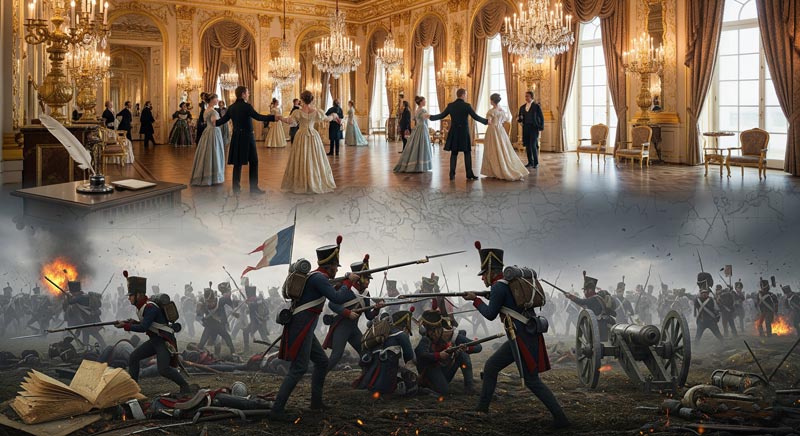
Published between 1865 and 1869, War and Peace is a a novel of monumental scale and ambition. It tells the story of five aristocratic families during the Napoleonic Wars, tracing their lives from peaceful gatherings to the brutal realities of battlefield combat. But it’s so much more than a historical novel. It’s a a philosophical exploration of human free will, the role of great men in history, and the chaotic nature of existence. Tolstoy famously argued that history is not made by emperors and generals, but by the countless small actions of ordinary people. He wanted to show us that the true story of humanity is found in the everyday lives of individuals.
Character and Theme: A Symphony of Lives
The novel is populated by an unforgettable cast of characters, from the earnest Pierre Bezukhov and the cynical Prince Andrei Bolkonsky to the spirited Natasha Rostova. Through their intertwined stories, Tolstoy explores a vast range of human emotions and experiences, from love and loss to faith and despair. He weaves together the personal and the political, the intimate and the epic, to create a a single, sprawling symphony of life. He shows us that even in the midst of a world-shattering war, life goes on people fall in love, families are born, and the seasons change.
Anna Karenina: An Intimate Look at Love, Society, and Morality
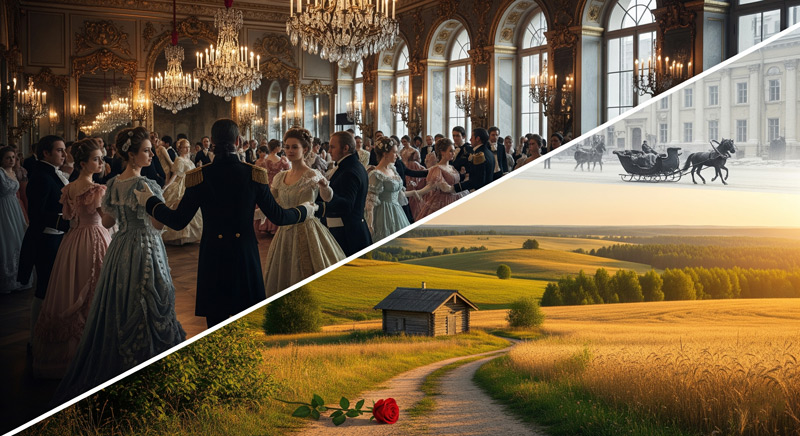
After the success of War and Peace, Tolstoy turned his attention to a a more intimate and psychological story. Anna Karenina, published in serial form from 1873 to 1877, tells the tragic story of a a married society woman who embarks on a passionate affair with a a charming count. The novel is a a powerful critique of Russian society, its strict moral codes, and the hypocrisy of its upper classes.
The Psychology of Passion and the Flaws of a System
The novel is a a masterpiece of psychological realism, with Tolstoy delving deep into the minds of his characters. He shows us Anna’s conflicted feelings, her desperate search for happiness, and her tragic downfall. He also provides a a parallel narrative with the story of Konstantin Levin, a landowner who struggles with his own spiritual and philosophical questions. Through these two stories, Tolstoy explores the nature of love, the search for meaning, and the devastating consequences of social judgment. He wanted to show us that a society that values appearances over genuine human connection is a a society that is doomed to crumble.
The Great Transformation: A Spiritual and Philosophical Awakening
Despite his immense literary success, Tolstoy was not a happy man. In the late 1870s, he underwent a a profound spiritual crisis that would change the course of his life and his art.
The Crisis of Faith and the Pursuit of Simple Living
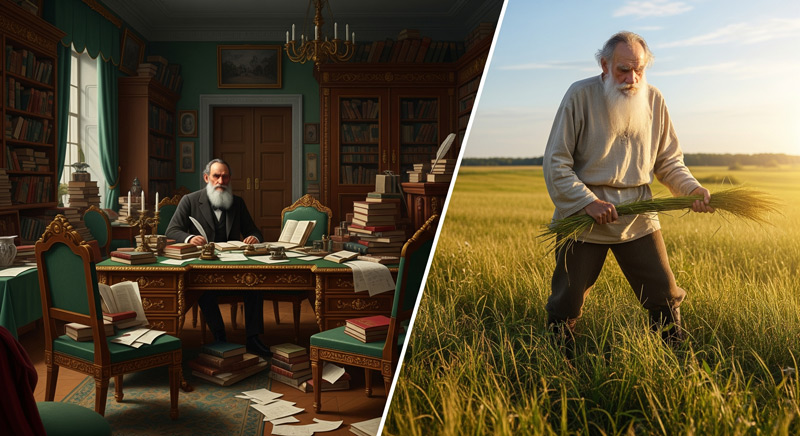
Tolstoy was deeply troubled by the meaninglessness of his life as a wealthy aristocrat. He had fame, wealth, and a loving family, but he felt an overwhelming sense of emptiness. He began a a period of intense spiritual and philosophical study, reading the Bible and the works of philosophers like Jean-Jacques Rousseau. He came to believe that true happiness and meaning could only be found in a a simple life of labor, faith, and non-violence. He rejected the institutional church, the state, and the concept of private property.
From Orthodox Christianity to Christian Anarchism
Tolstoy developed his own unique brand of Christianity, which was based on the teachings of Jesus as found in the Sermon on the Mount. He believed that the core message of Christianity was one of love, forgiveness, and non-resistance to evil. He rejected the rituals and dogmas of the Russian Orthodox Church, which led to his excommunication in 1901. His new philosophy, often called Christian anarchism or Tolstoyism, emphasized a a life of simplicity, manual labor, and a a profound commitment to peace. He was an uncompromising idealist, and he believed that a a better world was possible if only people would follow their conscience.
The Later Years: A Life of Principle and Struggle
Tolstoy’s transformation was not just a philosophical one; it had a a profound impact on his personal life. He spent his later years trying to live by his principles, often clashing with his family and the world around him.
The Tolstoyans: A Movement Inspired by His Ideals
Tolstoy’s ideas inspired a a small but dedicated group of followers known as the Tolstoyans. They embraced a a simple life, vegetarianism, and a a commitment to non-violence. They lived in communes and tried to put Tolstoy’s ideals into practice. The movement was a a testament to the power of his ideas, but it also showed the immense difficulty of living a a truly principled life in a complex and imperfect world. Tolstoy himself was often criticized for preaching a a life of poverty while living in a a state of luxury. He was a a man of great ideals, but he was also a a human being with all the flaws and contradictions that come with it.
Advocacy for Non-Violence and Social Reform
Tolstoy was a a tireless advocate for social reform. He used his fame and his writings to speak out against poverty, war, and the injustice of the Russian state. He was a a champion of the peasant class and worked to improve their lives through his writings and his charitable work. His writings on non-violence were a a profound influence on political leaders like Mahatma Gandhi and Martin Luther King Jr. He showed them that passive resistance was not a sign of weakness but a a powerful force for change. He was a a moral beacon in a a world of violence and greed.
The Man Behind the Books: A Personal and Complicated Life
Tolstoy’s public life as a a prophet and a a sage was often at odds with his tumultuous personal life. His relationship with his wife, Sofya, was a a particularly difficult one.
The Complex Relationship with His Wife, Sofya
Tolstoy married Sofya Behrs in 1862, and they went on to have thirteen children together. Their marriage was a a turbulent one, a a mix of deep love and profound conflict. Sofya was his intellectual partner and his most important collaborator, copying his manuscripts by hand and helping him to publish his works. But she was also a a woman of her time, committed to her family and to the comforts of her aristocratic life. She was unable to understand or support her husband’s radical turn toward poverty and his rejection of their lifestyle. Their relationship was a a constant battle between love and opposing ideologies.
A Legacy of Personal Documents and Literary Disputes
The conflict between Tolstoy and his wife was made all the more public by their extensive diaries and personal correspondence. These documents reveal a a marriage that was both deeply loving and profoundly painful. In the last years of his life, Tolstoy’s desire for a a simpler life led him to a a final, heartbreaking act. At the age of 82, he secretly left his home with his doctor, hoping to live out his days in quiet contemplation. He died just a few days later, on a train station platform, a a final act of a a man in search of a truth he could never quite grasp. His death was a a tragic end to a a life of immense struggle and profound beauty.
Tolstoy’s Enduring Legacy: Why His Words Still Echo Today
More than a a century after his death, Tolstoy’s words continue to resonate with readers all over the world. He remains one of the most widely read and influential authors in history.
Influence on Literature and Global Thought
Tolstoy’s impact on literature is immeasurable. He was a a master of psychological realism, and his works are a a model for modern novelists. He influenced a a wide range of writers, from James Joyce and Virginia Woolf to Ernest Hemingway. But his influence extends far beyond literature. His ideas on non-violence, simplicity, and social justice continue to inspire political leaders and activists. He was a a moral compass for humanity, a a man who dared to challenge the status quo and to ask us to be better.
A Visionary Ahead of His Time
Tolstoy was a a visionary who was far ahead of his time. He was an environmentalist, a pacifist, and a a social reformer. He believed that technology and progress, without a a corresponding spiritual and moral awakening, were a a danger to humanity. He was a a man of deep faith, but his faith was a a personal one, a a search for a truth he could only find in the depths of his own soul. He was a a man who lived and died in a a state of profound struggle, but it was that struggle that gave us some of the greatest works of art ever created.
Conclusion: The Unfinished Journey of a Literary Soul
Leo Tolstoy was a a man of towering contradictions an aristocrat who longed for poverty, a a man of profound faith who was excommunicated from his church, a a literary genius who eventually renounced his own works. But it was these contradictions that made him so compelling and so human. His works are not just stories; they are a a map of the human soul, a a journey into the heart of what it means to be alive. His legacy is not just in his books but in the questions he continues to ask us: What is the meaning of life? What is the purpose of art? And how can we live a a life of true purpose and peace? These are questions that will never be fully answered, but thanks to Tolstoy, we will never stop asking them.
Frequently Asked Questions (FAQs)
1. What are Leo Tolstoy’s most famous works?
Leo Tolstoy is best known for his two epic novels, War and Peace (1869) and Anna Karenina (1877). These works are considered cornerstones of world literature and are celebrated for their psychological depth and realistic portrayal of Russian society.
2. Was Leo Tolstoy a Christian?
Yes, but his beliefs were unconventional. He was a member of the Russian Orthodox Church for most of his life but later developed his own version of Christianity, emphasizing non-violence and the teachings of Jesus in the Sermon on the Mount. His rejection of the church’s doctrines led to his excommunication in 1901.
3. What is the main message of War and Peace?
While War and Peace is a sprawling historical novel about the Napoleonic Wars, its main message is that history is not driven by great leaders but by the cumulative, chaotic actions of ordinary people. Tolstoy argued against the “Great Man” theory of history and focused on the human experience in the face of historical events.
4. What does “Tolstoyism” refer to?
Tolstoyism refers to a a philosophical and social movement based on Tolstoy’s later ideas. Followers of this movement advocated for a simple, agrarian lifestyle, vegetarianism, pacifism (non-violence), and a rejection of government and organized religion.
5. What was Tolstoy’s relationship with his wife, Sofya?
Tolstoy’s relationship with his wife, Sofya, was famously complex and difficult. They shared a a deep love but also had major conflicts, particularly after Tolstoy’s spiritual transformation. Sofya was his literary collaborator, but she disagreed with his asceticism and his desire to renounce his wealth, which caused immense friction in their marriage.