
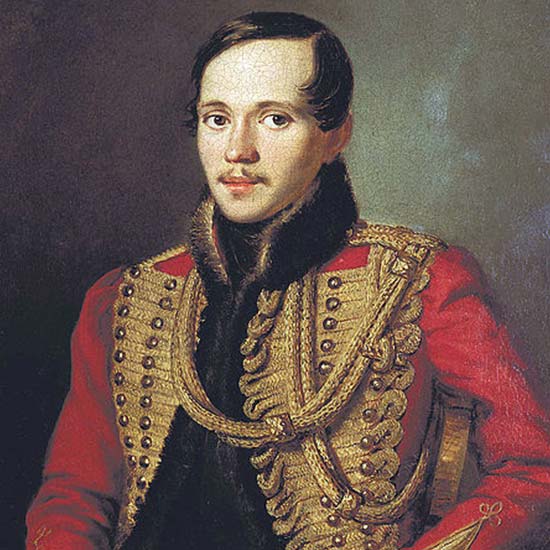
Mikhail Lermontov, the Restless Genius: Unpacking His Life and Legacy
Mikhail Lermontov was a poet, a novelist, a playwright, and a painter who lived a mere 26 years, yet in that brief time, he produced a body of work so profound and powerful that it forever changed the course of Russian literature. Lermontov was the quintessential Byronic hero: melancholic, disillusioned, and full of a cynical romanticism that spoke to a generation that had lost its ideals. He was a master of capturing the inner turmoil of the human spirit, a man who, like his own characters, found himself at odds with the world and ultimately paid the ultimate price. He stands in the shadow of Pushkin, his literary hero and tragic predecessor, yet his unique, brooding voice carved out a space all his own.
The Formative Years: A Life Forged in Solitude and Sickness
Mikhail Yuryevich Lermontov was born in 1814 into a noble family, but his childhood was far from privileged. It was a life of emotional turmoil and physical isolation that would shape the melancholy and cynicism of his art.
The Poet’s Difficult Childhood
Lermontov’s mother died when he was only three years old, leaving him to be raised by his grandmother, a wealthy and formidable figure. She took control of his life, keeping him from his father, who she believed was beneath their family’s social standing. This act of separation created a deep and lasting wound in the young Lermontov. He grew up feeling like an orphan, caught between the love he felt for his absent father and the opulent, yet emotionally cold, world his grandmother provided. This early sense of abandonment and displacement is a powerful current that runs through all of his work.
The Absence of a Father and the Grand-dame’s Influence
His grandmother’s influence was paradoxical. She gave him a superb education, hiring private tutors to teach him languages, history, and literature. She even took him to the spa towns of the Caucasus Mountains to treat his chronic childhood illnesses. But she also stifled him, trying to control his every move. This created a rebellious streak in Lermontov. He yearned for freedom and authenticity, and the characters he would later create like the restless Pechorin are, in many ways, an extension of this personal struggle.
The Byronic Hero in the Caucasus: Lermontov’s Literary Style
Lermontov’s work is a fascinating blend of European Romanticism and a uniquely Russian sense of disillusionment. He took the grand, sweeping themes of the Romantic movement and grounded them in the harsh, beautiful reality of the Russian Caucasus.
The Romantic Ideal and Its Discontents
Like many young writers of his time, Lermontov was deeply influenced by the English poet Lord Byron. He saw in Byron’s work a reflection of his own feelings of alienation and defiance. He embraced the Romantic ideal of the solitary, sensitive hero who is at odds with a mundane and hypocritical society. However, Lermontov added a cynical twist. His heroes aren’t just misunderstood; they are often the cause of their own unhappiness, trapped by their own self-destructive tendencies.
The Influence of Pushkin and Western Romantics
Pushkin, with his elegant prose and clear-eyed vision, was a profound influence on Lermontov. Lermontov revered him, and Pushkin’s untimely death in a duel in 1837 was a pivotal moment for the younger poet. Lermontov’s fiery elegy, “The Death of the Poet,” a direct condemnation of the court and society he felt was responsible for Pushkin’s demise, was a public act of defiance that cemented his reputation as a rebellious voice. It also led to his first exile, a punishment that would become a pattern in his short life.
The Lermontov Hero: Flawed, Melancholy, and Cynical
Lermontov’s characters are complex and deeply flawed. They are not the simple heroes of adventure novels. They are introspective, moody, and often cruel to those who love them. They are full of a kind of intellectual emptiness, a profound boredom that makes them incapable of finding genuine happiness. They are, in a sense, a mirror to a generation of Russian intellectuals who, feeling powerless to change society, retreated into a world of cynicism and self-destructive behavior.
A Mirror to a Disillusioned Generation
This feeling of disillusionment was a key part of Lermontov’s appeal. His writing captured the mood of a generation that had seen the failure of the Decembrist Revolt and felt suffocated by the rigid autocracy of Tsar Nicholas I. They had grand ideals but nowhere to put them into practice. Lermontov’s characters articulated their frustration and despair, giving voice to their quiet rebellion.
A Hero of Our Time: The Novel That Defined an Era
If you want to understand Lermontov’s genius, you must read A Hero of Our Time (1840). It is a landmark work of Russian literature, often considered the first Russian psychological novel. It is an extraordinary novel for its time, not just for its content but for its groundbreaking structure.
A Journey into the Human Psyche
The novel is a character study of a single man, Grigory Pechorin. We don’t get a clear, linear narrative. Instead, we see him through the eyes of other people and, most importantly, through his own private journal. This layered approach allows Lermontov to peel back the layers of Pechorin’s character, revealing his contradictory nature. He is a man of great intelligence and courage, capable of tender emotions, yet he is also incredibly selfish, cruel, and manipulative. He destroys the lives of everyone around him, seemingly for no reason other than to relieve his own profound boredom.
Pechorin, the Ultimate Anti-Hero
Pechorin is not a hero in any conventional sense. He is the ultimate anti-hero. He is an enigma, a man without a purpose, who is both a victim of his time and a perpetrator of his own misery. He is a reflection of the Byronic hero taken to its logical, and tragic, conclusion. We are captivated by him, even as we are repulsed by his actions. Lermontov dares us to look at this deeply flawed character and find a piece of ourselves in him.
The Narrative Structure: A Puzzle Box of Perspectives
The novel’s structure is like a puzzle box. We first meet Pechorin through the eyes of an old acquaintance, then through the eyes of a young officer, and finally through his own diary. Each perspective gives us a different piece of the puzzle, and it is up to the reader to assemble the complete picture. This fractured, subjective approach to storytelling was revolutionary for its time and is a key reason why the novel still feels so modern.
Lermontov’s Poetic Masterpieces: Lyrical and Prophetic
While his novel is his most famous work, Lermontov was first and foremost a poet. His poems are filled with the same raw emotion and intellectual turmoil that define his prose.
The Demon: A Tale of Spiritual Rebellion
Lermontov’s long narrative poem, The Demon, is a masterpiece of Russian Romanticism. It tells the story of a fallen angel who falls in love with a mortal woman in the Caucasus Mountains. The Demon is a classic Byronic figure: a proud, solitary outcast who longs for redemption but is ultimately trapped by his own cynical nature. The poem is a stunning work of lyrical beauty and philosophical depth, a powerful exploration of good and evil, love and despair.
The Death of the Poet: An Ode to Pushkin and an Act of Defiance
This poem, written in the immediate aftermath of Pushkin’s death, is arguably Lermontov’s most famous work. It starts as a mournful tribute to his literary hero but quickly turns into a furious, biting indictment of the Tsar’s court and the society that Lermontov believed was responsible for Pushkin’s death. It was a bold and dangerous act that led to his exile to the Caucasus, a place he loved and wrote about extensively.
The Final Duel and an Enduring Legacy
Lermontov’s life, much like his work, came to a tragic and premature end.
The Tragic End: A Second Duel at a Young Age
In 1841, while serving in the military in the Caucasus, Lermontov found himself in a petty quarrel with a fellow officer, Nikolay Martynov. The argument, which began with a joke about Martynov’s appearance, escalated into a challenge to a duel. Lermontov, perhaps bored or simply resigned to his fate, reportedly fired his pistol into the air. Martynov, however, did not miss. Lermontov was killed instantly. He was only 26 years old.
A Life Cut Short and a Legend Born
Lermontov’s death was a national tragedy, an echo of Pushkin’s own demise just four years earlier. It solidified his place in the Russian imagination as a tormented, rebellious genius whose brilliance was extinguished by a society that could not contain his spirit. His short life became a part of his legend, a powerful symbol of the unfulfilled potential of a brilliant mind.
Conclusion: The Unquiet Echo of Lermontov’s Voice
Mikhail Lermontov’s legacy is a paradox. He was a writer of profound melancholy and cynicism who, in his brief and tumultuous life, gave voice to the hopes, fears, and frustrations of an entire generation. He showed us that a hero can be flawed, that love can be a source of torment, and that the greatest battles are often fought within the human heart. His work is a beautiful and haunting exploration of a disillusioned soul, a powerful reminder that even in despair, there can be a kind of terrible and unforgettable beauty. His restless spirit lives on in the pages of his books, an unquiet echo that still resonates with anyone who has ever felt like an outcast in their own time.
Frequently Asked Questions (FAQs)
1. Why is Mikhail Lermontov often compared to Lord Byron?
Lermontov is often compared to Lord Byron because of their shared Byronic persona. Both were rebellious, moody, and cynical Romantic poets who were outsiders in their societies. Their heroes, like Lermontov’s Pechorin and Byron’s Manfred, are complex, melancholic figures who are at odds with the world and often suffer from a profound sense of disillusionment.
2. What is the significance of “A Hero of Our Time”?
A Hero of Our Time is considered the first Russian psychological novel. Its significance lies in its groundbreaking narrative structure, which presents the protagonist, Pechorin, from multiple perspectives. This approach allows Lermontov to create a deeply complex and modern anti-hero, exploring the internal contradictions of a disillusioned man in a way that was revolutionary for its time.
3. What was Lermontov’s relationship with Pushkin?
Lermontov deeply admired Pushkin. When Pushkin was killed in a duel, Lermontov wrote a famous and incendiary poem, “The Death of the Poet,” which directly blamed Pushkin’s death on the corruption of the Tsar’s court. This poem brought Lermontov immediate fame but also led to his exile, forging his reputation as a defiant and rebellious figure.
4. How did Lermontov’s personal life influence his writing?
Lermontov’s personal life, marked by the absence of his father and the stifling control of his grandmother, deeply influenced his work. His characters often grapple with themes of loneliness, abandonment, and a search for belonging. His own rebellious nature and sense of alienation are reflected in his many Byronic heroes who feel trapped by the social conventions of their time.
5. What is the meaning of the title “A Hero of Our Time”?
The title of the novel is ironic. The protagonist, Pechorin, is the opposite of a traditional hero. The title is a social commentary, suggesting that a man like Pechorin cynical, bored, and self-destructive is the kind of “hero” a disillusioned society deserves. The title is a satirical reflection on the values of the Russian aristocracy during the 1830s.