
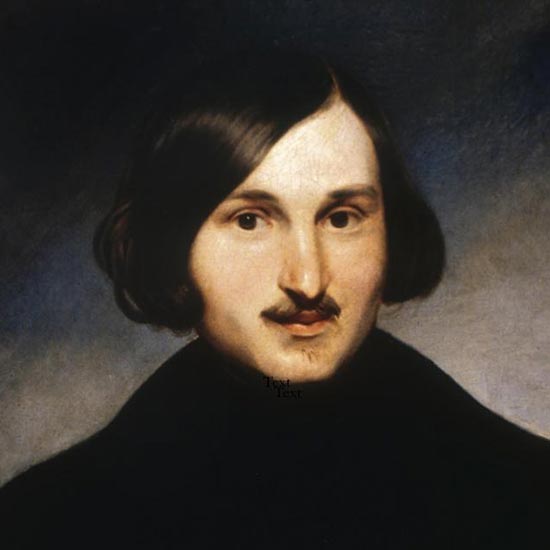
Nikolai Gogol, the Unsettling Genius: Unmasking His Bizarre and Brilliant World
Nikolai Gogol was a writer who didn’t just tell stories; he conjured up a world. It was a world so strange, so absurd, and so unsettling that you can’t help but laugh, even as a shiver runs down your spine. In his work, a man’s nose could run away and start a career of its own, petty officials were terrified into submission by a mere rumor, and the dead could be more valuable than the living. Gogol wasn’t a realist in the traditional sense. Instead, he was a master of the grotesque, a surrealist before the movement even existed. His work is a funhouse mirror held up to society, distorting reality to reveal the absurdity, hypocrisy, and spiritual emptiness lurking just beneath the surface. He was a man of deep contradictions, tormented by his own genius, and his brief, brilliant career left an indelible mark on not just Russian literature, but on the entire literary world.
A Life of Contradictions: From Ukrainian Village to Russian Literary Icon
To truly grasp the bizarre genius of Gogol, we have to look at the man himself. Born in 1809 in the Ukrainian village of Velyki Sorochyntsi, he came from a family of Cossack gentry. His upbringing was a fascinating tapestry of rural traditions, rich folklore, and a deep-seated religiosity that would later consume him.
A Childhood of Folklore and Fear
Gogol’s childhood was steeped in the magical and the macabre. The Ukrainian countryside was a land of superstitions, folk tales, and supernatural legends. His mother, a deeply religious and emotional woman, filled his head with stories of devils, witches, and spirits. This rich folkloric tradition, with its blend of comedy and terror, is the bedrock of his early work. You can see it in his short story collections, where the supernatural and the mundane collide with hilarious and horrifying results. This early immersion in the fantastic would give his writing a unique, otherworldly quality that sets him apart from his contemporaries.
The Influence of Ukrainian Culture and Supernatural Tales
Ukrainian culture itself, with its vibrant imagery and its mix of joyful festivity and somber mysticism, provided a rich source of inspiration. Gogol’s early stories are full of lively descriptions of Ukrainian life, from the raucous feasts to the whispered ghost stories. He was one of the first to bring this regional flavor to the broader Russian literary scene, creating a sense of place that was both deeply specific and universally resonant.
The Arrival in St. Petersburg and a Quest for Identity
At the age of 19, Gogol moved to St. Petersburg, the grand, bureaucratic capital of the Russian Empire. This move was a seismic shift. He left behind the warm, rustic world of his childhood for a cold, impersonal, and deeply hierarchical city. He felt like an outsider, a small-town boy in a big city. This experience of alienation and his observation of the city’s rigid social strata, with its pretentious officials and its stifling bureaucracy, became a central theme in his work. He saw the city as a monstrous, soulless machine that ground down the human spirit.
The Gogol Style: A Unique Blend of Humor, Grotesque, and Surrealism
If you asked a literary critic to define Gogol’s style, you might get a lot of different answers. Is it realism? Is it satire? Is it comedy? The truth is, it’s all of those things and none of them. His style is a genre all his own, a bizarre and brilliant concoction that is instantly recognizable.
The Art of the Absurd and the Uncanny
Gogol was a master of the absurd. He took everyday situations and characters and twisted them just enough to reveal their ridiculousness. Think of his short story “The Nose,” where a civil servant wakes up one morning to find his nose has disappeared from his face and is now walking around St. Petersburg in a high-ranking official’s uniform. It’s a surreal, illogical premise, but Gogol’s prose is so straight-faced that it feels chillingly plausible. This blend of the bizarre and the mundane is what makes his work so unsettling and so unforgettable. It’s what literary theorists call the uncanny that feeling of something both familiar and strange at the same time.
The Grotesque and the Human Condition
Gogol’s work is filled with the grotesque. His characters are often physical caricatures, with bloated faces, ridiculous names, and strange tics. He uses physical ugliness and exaggeration not just for laughs but to expose the spiritual and moral emptiness of his characters. He saw the outward appearance of his characters as a reflection of their inner decay. The grotesque in Gogol isn’t just a funny joke; it’s a profound statement on the human condition.
Satire with a Purpose: Laughter Through Tears
Gogol was a ferocious satirist, but his wasn’t a gentle, polite mockery. It was a brutal, no-holds-barred attack on the hypocrisy and corruption of Russian society. He once said that his purpose was to make people “laugh at their own vices,” and he certainly succeeded. But his humor is always tinged with a deep sense of sadness, a feeling he called “laughter through tears.” You laugh at the absurdity of the characters, but you also feel a profound pity for their smallness and their spiritual poverty.
Exposing the Hypocrisy of Russian Society
His satire was a form of social critique. He ruthlessly exposed the class snobbery, the bureaucratic incompetence, and the sheer emptiness of the lives of the Russian gentry and officialdom. He showed how people were trapped by their own greed and vanity, and how their lives were a hollow performance for the sake of appearances. His work was a wake-up call, a shocking and hilarious indictment of a society that was rotting from the inside out.
Exploring the Masterpieces: A Journey into Gogol’s Greatest Works
Gogol’s literary output may not have been vast, but it was filled with masterpieces that have influenced generations of writers.
The Inspector General: A Comedy of Errors and Fear
His play, The Inspector General, is a brilliant comedy of errors and one of the most famous satires in all of world literature. The plot is simple: a small-town mayor and his officials, consumed by fear of a government inspection, mistake a penniless young man for the powerful inspector general. The resulting chaos is a masterclass in comedy. The officials bribe, flatter, and grovel before the fake inspector, revealing their own corruption and fear. It’s a blistering satire on the venality and incompetence of bureaucracy.
A Mirror to Official Corruption
What makes The Inspector General so timeless is that its themes are universal. The play is not just about Russian officials; it’s about the way power corrupts, the way fear can make people act foolishly, and the way society often rewards deceit over honesty. The play’s final line, where the real inspector general’s arrival is announced, leaves the audience with a sense of dread, suggesting that the grotesque absurdity of the play is, in fact, the grim reality.
Dead Souls: A Macabre Epic of Greed and Deceit
Dead Souls is Gogol’s magnum opus and one of the most unique novels ever written. It follows the journey of a mysterious man named Chichikov, who travels across Russia to buy “dead souls” the names of deceased serfs who are still listed on the census. Chichikov’s scheme is a brilliant con: he can use these names as collateral to get a loan and become a wealthy landowner. But the novel is far more than a simple con story.
Chichikov and the Art of the Con
As Chichikov travels, he meets a gallery of grotesque and memorable landowners, each one a different manifestation of human greed, selfishness, and spiritual poverty. The novel is a sprawling, macabre epic, a picaresque journey through a Russia that is spiritually dead. The very title, Dead Souls, refers not just to the deceased serfs, but to the living characters who are spiritually and morally empty.
Petersburg Tales: The Surreal and the Subversive
Gogol’s short stories, known as the Petersburg Tales, are a series of surreal, subversive masterpieces set in the city of St. Petersburg. Stories like “Nevsky Prospekt,” “The Portrait,” and “The Overcoat” paint a picture of a city that is both physically magnificent and spiritually hollow. They explore themes of illusion, art, madness, and the crushing weight of social status.
The Nose and the Break from Reality
“The Nose” is a prime example of his Petersburg Tales and is often considered one of the first works of absurd literature. The story’s central premise a runaway nose that takes on a life of its own is a complete break from reality. But this absurdity serves a higher purpose. It’s a biting satire on a society so obsessed with status and rank that a nose, simply because it is dressed in an official’s uniform, commands more respect than a human being. It’s a hilarious and terrifying glimpse into the madness of social hierarchy.
Gogol’s Final Years and Enduring Legacy
Gogol’s life, as brilliant as it was, ended in tragedy. His last years were marked by a profound spiritual crisis that ultimately silenced his creative voice.
A Spiritual Crisis and the Destruction of a Masterpiece
In the 1840s, Gogol, increasingly tormented by religious guilt and a fear of damnation, fell under the influence of a fanatical priest. He came to believe that his literary work, particularly the satirical and grotesque elements, was sinful. In a moment of madness and spiritual turmoil, he burned the second volume of Dead Souls just days before his death. It was a tragic loss for world literature, a symbolic act of a genius who had become a prisoner of his own tormented soul.
The Influence on Russian and World Literature
Gogol’s legacy is immense. He is considered one of the founding fathers of modern Russian literature, a man who broke from the rigid literary conventions of his time and paved the way for the great novelists who followed. His use of the grotesque, his psychological depth, and his focus on the lives of ordinary people had a profound impact on generations of writers.
From Dostoevsky to Bulgakov and Beyond
Fyodor Dostoevsky famously declared, “We all came out of Gogol’s ‘Overcoat.'” This is no exaggeration. Gogol’s focus on the “little man” and his inner world directly influenced Dostoevsky’s exploration of psychological torment and social injustice. Later, writers like Mikhail Bulgakov, with his own brand of magical realism and biting satire, and playwrights like Anton Chekhov, with his attention to the absurdities of provincial life, were all deeply indebted to Gogol’s pioneering vision. His influence is a long shadow that stretches far beyond Russia, touching writers like Franz Kafka and the entire tradition of absurd and surrealist literature.
Conclusion: A Haunting Voice That Still Whispers
Nikolai Gogol was a man of paradoxes: a deeply religious soul who wrote about demons and devils, a meticulous stylist who celebrated the grotesque, and a humorist who found laughter in the most painful human truths. His works are not just stories; they are a unique and unsettling window into the human condition. They force us to confront the absurdity of our own lives, the hypocrisy of our institutions, and the spiritual hollowness that often lies beneath a polished surface. Gogol’s voice may have been silenced by his inner demons, but it continues to haunt us, a bizarre and beautiful echo that reminds us that sometimes, the strangest stories are the ones that tell us the most profound truths.
Frequently Asked Questions (FAQs)
1. What is the significance of “The Nose” in Gogol’s work?
“The Nose” is one of Gogol’s most famous short stories and is a prime example of his absurd style. It is significant because its central, illogical premise a man’s nose running away and becoming a high-ranking official is a biting satire on the Russian social hierarchy’s obsession with rank and appearance over human decency and reality.
2. What does the term “laughter through tears” mean in the context of Gogol’s writing?
“Laughter through tears” is a phrase used to describe the unique tone of Gogol’s satire. It means that while his works are often hilarious and full of comical absurdity, they are also tinged with a deep sense of sadness and pity for the spiritual emptiness and moral decay of his characters and society.
3. Why did Gogol burn the second volume of his novel, “Dead Souls”?
In his final years, Gogol was consumed by a deep spiritual and religious crisis. He came to believe that his work was sinful and that it was his religious duty to abandon it. In a moment of extreme turmoil, he burned the manuscript for the second volume of Dead Souls just days before his death, an act that is seen as a tragic end to his creative life.
4. How did Gogol influence Fyodor Dostoevsky?
Gogol had a profound influence on Dostoevsky, particularly with his focus on the “little man” the downtrodden, insignificant civil servant. Dostoevsky famously said, “We all came out of Gogol’s ‘Overcoat,'” referring to Gogol’s compassionate portrayal of a minor clerk, a theme Dostoevsky would later explore in his own psychologically complex novels.
5. What is the main theme of “Dead Souls”?
The central theme of Dead Souls is the spiritual and moral emptiness of the Russian gentry. The novel follows the protagonist, Chichikov, as he attempts to buy the “dead souls” of serfs. However, the true “dead souls” are not the deceased serfs but the living landowners who are spiritually bankrupt, consumed by greed, pettiness, and moral decay.