
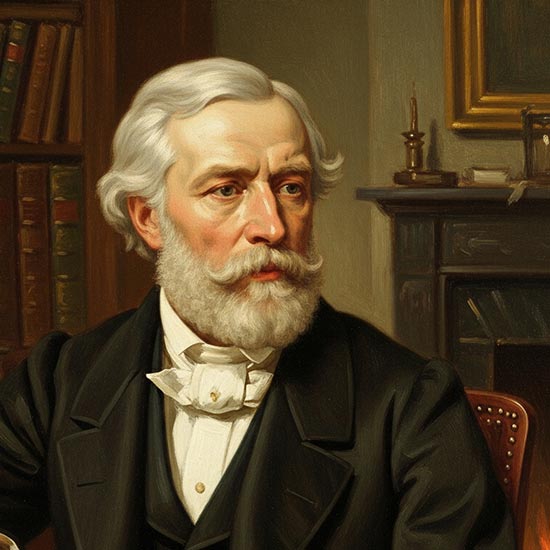
Ivan Turgenev, the Poet of the Russian Soul: Unpacking the Art of Ivan Turgenev.
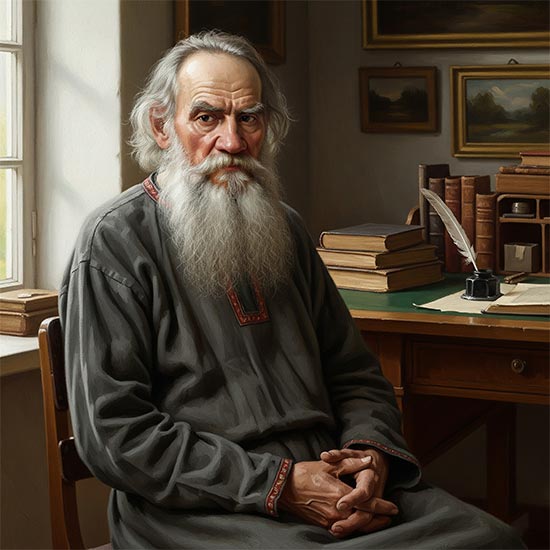
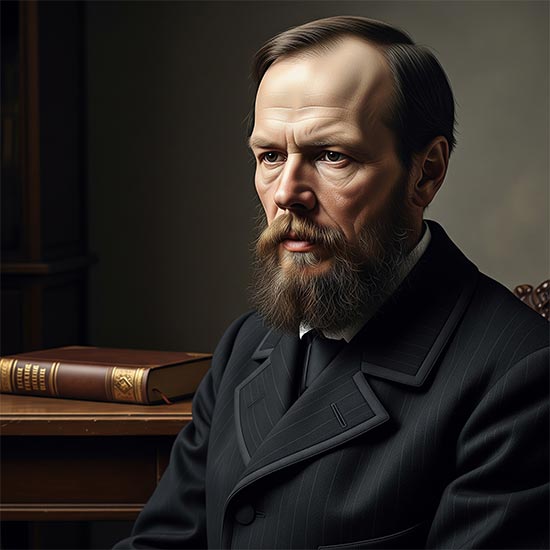
Ivan Turgenev was a writer whose work feels like a quiet, melancholic stroll through the countryside, where the greatest dramas unfold not in grand gestures but in the unspoken glances between people. While his contemporaries, Tolstoy and Dostoevsky, were painting on vast, epic canvases filled with grand passions and spiritual turmoil, Turgenev was a master of the miniature. He was a poet of human longing, a painter of moods, and a chronicler of the subtle shifts in Russian society. His prose is a gentle, flowing river, carrying us through the lives of ordinary people grappling with love, disillusionment, and the inexorable march of time. Turgenev might not have the raw, visceral power of Dostoevsky or the sweeping scope of Tolstoy, but his is a voice of unparalleled grace and emotional depth, a voice that quietly defined an era and a literary tradition.
The Life and Times of a Gentleman-Writer
Ivan Turgenev was born in 1818 into a wealthy land-owning family. This privileged background provided him with a superb education and the financial freedom to travel extensively, but his early life was far from a fairytale. The complexities and contradictions of his upbringing would later fuel the very themes he explored in his novels.
A Privileged but Turbulent Childhood
Turgenev’s childhood was dominated by the tyrannical figure of his mother, Varvara Petrovna. She was a powerful, intelligent, and deeply eccentric woman who ruled her estate and her family with an iron fist. She was known for her explosive temper and her cruel treatment of her serfs and, at times, her own children. This early exposure to the brutality of serfdom and the capricious nature of power left a permanent mark on Turgenev’s psyche. It instilled in him a profound sense of injustice and a deep, lifelong sympathy for the downtrodden. This sympathy became a cornerstone of his literary work.
The Cosmopolitan Russian: Europe and His Homeland
Unlike many of his Russian contemporaries, Turgenev spent a significant portion of his life in Western Europe, particularly in Germany and France. He was a truly cosmopolitan figure, fluent in multiple languages and a friend to literary giants like Gustave Flaubert and Henry James. This dual existence living in the intellectual capitals of Europe while writing about the heartland of Russia gave him a unique perspective. He could observe the changing landscape of his homeland with a clear-eyed detachment, free from the political and social pressures of St. Petersburg and Moscow. He became a bridge between Russian and European thought, introducing the Western world to the psychological realism of Russian literature.
The Dawn of Russian Realism: Turgenev’s Literary Style
Turgenev’s literary journey began in the shadow of Romanticism, but he quickly found his true calling in the emerging style of Realism. His work is characterized by its quiet observation, its focus on psychological nuance, and its beautiful, evocative prose.
From Romantic Poetry to Realistic Prose
In his youth, Turgenev was an admirer of Romantic poets like Byron and Schiller. His early works were filled with the dramatic flair and heightened emotion of the Romantic school. However, he soon realized that the most compelling stories were not in the extraordinary but in the ordinary. He began to write with a surgeon’s precision, peeling back the layers of his characters to reveal their inner thoughts and anxieties. He was a master of the small detail, using a character’s gesture or a shift in their tone of voice to convey a world of meaning.
A Hunter’s Sketches and the Emancipation of the Serfs
One of his most significant works, and a key moment in his literary evolution, was A Hunter’s Sketches. This series of short stories and vignettes, published in the 1850s, offered a compassionate and unflinching look at the lives of Russian serfs. Turgenev painted them not as faceless masses but as complex, fully realized human beings with their own dreams, fears, and sorrows. The book was a sensation and is widely credited with helping to turn public opinion against serfdom, ultimately contributing to Tsar Alexander II’s decision to emancipate them in 1861.
The Art of the Nuance: Melancholy and Unrequited Love
Turgenev’s novels are drenched in a pervasive sense of melancholy. His characters often yearn for a love or a life that is just out of reach. He was a keen observer of unrequited love, showing how the quiet despair of a missed connection can be just as tragic as any grand tragedy. This focus on the subtle, the half-realized, and the bittersweet is what makes his work so deeply human and relatable. His stories feel like a melancholic song that stays with you long after the final note has faded.
The Turgenev Heroine: Strong-Willed and Independent
While the male characters in his novels often suffer from a kind of listlessness and indecision, Turgenev’s female characters are a different breed entirely. The Turgenev heroine is a figure of remarkable strength, integrity, and independence. Women like Liza Kalitina in A Nest of the Gentry and Elena Stakhova in On the Eve are not passive objects of affection. They are passionate, morally steadfast, and often more capable than the men who love them. They represent a new, more modern vision of the Russian woman, one who is unafraid to challenge convention and follow her heart, even if it leads to sacrifice.
Exploring the Masterpieces: Turgenev’s Enduring Themes
Turgenev’s novels are not just beautiful prose; they are also profound explorations of the intellectual and social forces shaping 19th-century Russia.
Fathers and Sons: A Generational Divide
His most famous and controversial novel, Fathers and Sons (1862), captured the generational conflict of the time with stunning accuracy. The novel pits the older, liberal-minded generation against the younger, radical “nihilists” who reject all traditional values and institutions. The book was a firestorm, with both sides of the political spectrum attacking Turgenev for misrepresenting them. He was, in a way, a victim of his own success. He had created a mirror so honest that no one was comfortable looking at their own reflection.
The Nihilist: Bazarov and the New Worldview
At the center of this firestorm is the character of Bazarov. He is a young medical student who believes only in science and tangible proof, rejecting everything from art to love. He is a symbol of the new, rationalist worldview that was challenging the old order. But Turgenev, with his characteristic nuance, doesn’t paint him as a simple villain. He shows Bazarov’s vulnerabilities, his loneliness, and his inner conflict. In doing so, he created one of the most complex and memorable characters in all of Russian literature.
A Nest of the Gentry: Nostalgia and Decay
In A Nest of the Gentry (1859), Turgenev explores the themes of nostalgia, regret, and the slow decay of the old Russian aristocracy. The novel is a poignant, almost unbearably sad story of a man who returns to his family’s dilapidated estate, only to find himself trapped by his past and a love that can never be. The story is a beautiful and heartbreaking elegy for a dying social class, a world that is fading away with the coming of modernity.
First Love: An Exploration of Unattainable Desire
First Love (1860) is a novella that is often considered one of the finest stories ever written about the pains and passions of young love. It’s a beautifully crafted psychological study of a sixteen-year-old boy’s infatuation with a charismatic older girl. The story captures the breathless excitement and the bitter disappointment of first love with a precision that is both tender and devastating. It shows Turgenev’s ability to find the universal in the personal, making a simple story of a boy’s crush feel like a profound reflection on the human heart.
The Rivalry and Friendship: Turgenev vs. Tolstoy and Dostoevsky
It’s impossible to discuss Turgenev without mentioning the two other giants of the Russian literary scene: Tolstoy and Dostoevsky. They were rivals in both art and life, and their relationships were complex, often hostile, but ultimately respectful.
A Tale of Three Giants and Their Different Visions
While Dostoevsky plunged into the psychological abyss and Tolstoy created vast, sprawling epics, Turgenev occupied the middle ground. He was more concerned with the subtle interplay between individuals and the social fabric that bound them together. He was a stylist, a psychologist, and a social observer, and in a way, he was the most “European” of the three. His prose was cleaner and more polished, and his themes were less metaphysical and more grounded in the everyday realities of human existence.
The Quarrel with Tolstoy and Reconciliation
Turgenev and Tolstoy, in particular, had a notoriously stormy relationship. Their political and personal disagreements were so intense that they led to a famous duel challenge that was only called off at the last minute. The two writers, so different in their personalities and their art, finally reconciled years later. Their complex relationship is a powerful reminder that even the greatest minds can be plagued by jealousy and ego, but it also shows the power of shared respect for art.
The Lasting Legacy of Ivan Turgenev
Why, more than a century after his death, do we still read Turgenev? His work may not be as explosive as Dostoevsky’s or as monumental as Tolstoy’s, but its quiet power has a lasting resonance.
The Bridge Between East and West
Turgenev was the first Russian writer to gain widespread acclaim in the West. He was the one who introduced Russian literature to a global audience, paving the way for the later success of Tolstoy and Dostoevsky. His ability to write with a universal emotional truth, transcending cultural and national barriers, made him a truly international literary figure.
Why His Works Still Speak to Us
Turgenev’s stories speak to us because they are so fundamentally human. They are not about superheroes or mythical figures, but about people like us. We see our own quiet struggles and unfulfilled desires in his characters. We understand the pain of a love that can never be, the disillusionment of growing older, and the bittersweet beauty of a moment that can never be recaptured.
Turgenev’s Quiet Revolution
In a world filled with noise and spectacle, Turgenev’s work is a powerful reminder of the beauty of subtlety and the strength of the quiet voice. He showed us that the greatest tragedies are not always public, but can unfold in the silent corners of the human heart. His was a quiet revolution, but one that permanently changed the face of literature.
Conclusion: A Gentle Voice That Echoes Through Time
Ivan Turgenev was a writer of remarkable grace and profound empathy. He didn’t need grand pronouncements or dramatic fireworks to capture the complexities of the human condition. Instead, he used a gentle, observant hand to paint a world filled with longing, loss, and an enduring hope. He was a poet of the Russian soul who found the universal in the particular. His work is a beautiful and timeless invitation to slow down, to listen closely, and to appreciate the profound drama that exists in the quiet moments of our lives.
Frequently Asked Questions (FAQs)
1. What is Ivan Turgenev’s most famous novel?
Turgenev’s most famous and arguably most significant novel is Fathers and Sons (1862). It is a landmark work in Russian literature for its brilliant portrayal of the conflict between the older, traditional generation and the younger, radical nihilist generation.
2. What is the “Turgenev heroine”?
The “Turgenev heroine” refers to a type of female character in his novels who is known for her strength, intelligence, moral integrity, and independence. Unlike many female characters of the time, they are not passive, but are often the driving force behind the plot and the moral compass of the story.
3. How was Turgenev different from Tolstoy and Dostoevsky?
While all three are giants of Russian literature, they had distinct styles. Turgenev’s work is characterized by its elegant, polished prose, its focus on psychological nuance, and its more restrained, melancholic tone. In contrast, Tolstoy wrote vast, epic narratives, and Dostoevsky explored the darker, more turbulent aspects of the human psyche.
4. What role did Turgenev’s mother play in his life and work?
Turgenev’s mother, Varvara Petrovna, was a tyrannical and abusive figure. Her cruel treatment of her serfs and her own family instilled in Turgenev a deep empathy for the suffering of others and a lifelong aversion to injustice, which became a central theme in many of his works, particularly A Hunter’s Sketches.
5. Why is Turgenev considered a “bridge between East and West”?
Turgenev spent much of his adult life living in Western Europe, where he became a friend to many prominent writers. He was the first Russian author to gain widespread popularity and critical acclaim in Europe, and his work served as a crucial introduction for a Western audience to the depth and artistry of Russian literature.