
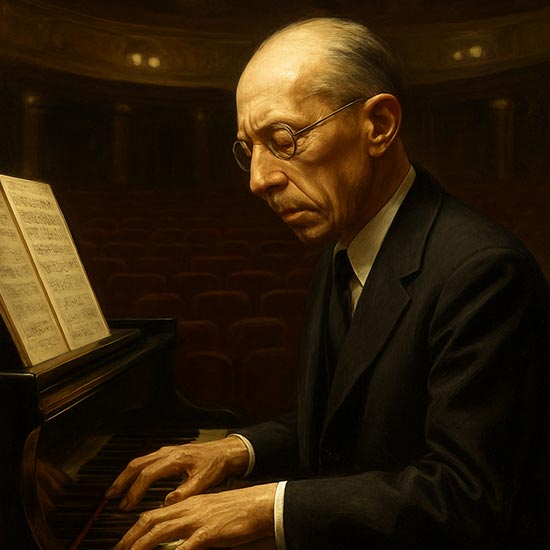
Igor Stravinsky, The Revolutionary of Sound: Exploring a Life of Unrelenting Innovation and Unprecedented Influence
Imagine a moment in history where a single piece of music caused a riot. Not just a minor commotion, but a full-blown public disturbance, with shouts, arguments, and even physical fights. That’s exactly what happened in 1913 at the premiere of Igor Stravinsky’s ballet, The Rite of Spring. It was a moment that didn’t just change music history; it tore it apart and rebuilt it in a startling, new image. Stravinsky wasn’t a composer who followed the rules; he was a revolutionary who believed the rules were made to be broken. His life was a masterclass in artistic reinvention, a journey that took him from the lavish world of Imperial Russia to the intellectual salons of Paris and, finally, to the sun-drenched hills of Hollywood. He was a chameleon of composition, constantly changing his style, yet always remaining unmistakably himself. His work, at times beautiful, at times brutal, and always brilliant, stands as a monument to the restless, revolutionary spirit of the 20th century.
The Early Years: From Law Student to Musical Maverick
To understand the genius of Stravinsky, you have to look at his beginnings. His was not a typical path to musical greatness; it was a journey filled with detours and an unyielding intellectual curiosity.
A Path Forged in Unconventional Learning
Born in 1882 in Oranienbaum, a suburb of St. Petersburg, Stravinsky came from a musical family. His father was a bass singer at the Imperial Mariinsky Theatre, and the young Igor was exposed to the world of opera from a very early age. Despite this, his family wanted him to pursue a more “sensible” career, and he was sent to study law at the University of St. Petersburg. But Stravinsky had other plans. While he was studying law, he was secretly composing, and his passion for music was growing by the day.
The Influence of Rimsky-Korsakov
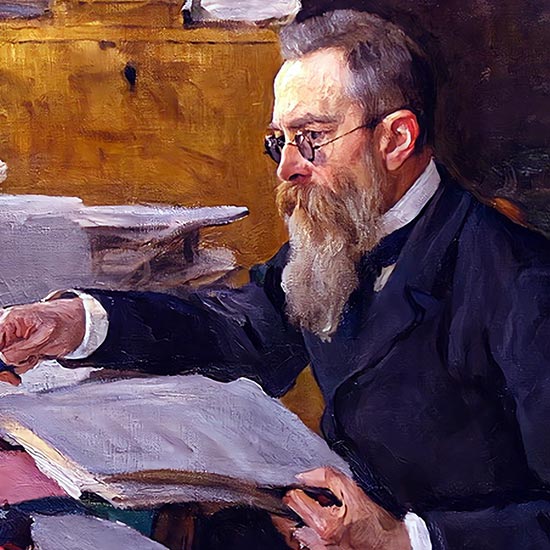
In 1902, Stravinsky had a meeting that would change the course of his life: he met the great Russian composer Nikolai Rimsky-Korsakov. He was the master of Russian musical nationalism and a genius of orchestration. Rimsky-Korsakov was so impressed with Stravinsky’s talent that he took him on as a private student. This was an unconventional arrangement, as Stravinsky never formally enrolled in the conservatory. But his years of study with Rimsky-Korsakov were formative. He learned the secrets of orchestration and the art of composing for the orchestra, a skill that would later become a defining characteristic of his work.
The Ballets Russes: A Collaboration That Changed Music History
The most important collaboration of Stravinsky’s early career was with Sergei Diaghilev, the visionary impresario of the Ballets Russes. Diaghilev, who was always on the lookout for new and exciting talent, was captivated by Stravinsky’s early works. He commissioned him to write a series of ballets for his company, a collaboration that would not only make Stravinsky a global star but would also change the face of 20th-century music.
The Petrushka and The Firebird Triumphs
The first two ballets, The Firebird (1910) and Petrushka (1911), were instant successes. The Firebird, with its rich, vibrant orchestration and its magical themes, was a perfect showcase for Stravinsky’s mastery of the orchestra. It was a fairy-tale ballet that was both deeply Russian and completely modern. Petrushka was an even bigger leap forward. It was a story of a lovesick puppet, and Stravinsky’s music was a brilliant tapestry of sound, with its jagged rhythms and its complex harmonies. These two ballets cemented his reputation as a major new voice in European music.
The Rite of Spring: The Riot That Defined a New Era
But nothing could have prepared the world for what came next. In 1913, Stravinsky and Diaghilev premiered The Rite of Spring, a ballet that was so radical, so different, and so powerful that it caused a riot.
A Premier That Shocked the World
The story of the ballet’s premiere at the Théâtre des Champs-Élysées in Paris is the stuff of legend. The audience, expecting a beautiful, lyrical ballet, was met with a brutal, aggressive sound. The music was filled with jarring dissonance, irregular rhythms, and a raw, untamed power. The choreography, by Vaslav Nijinsky, was equally shocking, with its primitive, stomping movements. The audience was outraged. They started to shout, to argue, and to fight. .
The Audience’s Fury and the Birth of Modernism
The riot was a physical manifestation of a cultural shift. It was a moment where the old world of classical music came face to face with the new world of modernism. The audience was not ready for a music that was so aggressive, so primitive, and so unapologetically modern. But the very fury that the music inspired proved its power. It was a sound that you could not ignore. It was a sound that announced, in a single, brutal chord, that a new era had begun.
The Music’s Unrelenting Power
So, what made the music so shocking? It was Stravinsky’s use of polyrhythms (multiple rhythms playing at the same time), dissonance, and unconventional harmony. The music felt like a primal scream, a raw, almost violent expression of sound. It was a world away from the lush, lyrical melodies of his predecessors. It was a music that was not meant to be beautiful; it was meant to be powerful.
The Primitivist Sound of Rhythmic Chaos
The music’s sound was part of a larger artistic movement called primitivism. Stravinsky, like many other artists of the time, was fascinated by the raw, untamed energy of ancient, pre-industrial cultures. The music of The Rite of Spring was an attempt to capture that primal, ancient sound. It was a work of immense creative ambition, a masterpiece that, with its rhythmic chaos and its powerful dissonance, proved that music could be a force for revolution.
Stravinsky’s Style: A Chameleon of Composition
After the riot, you might think that Stravinsky would have tried to write something less shocking. But that was not his way. Stravinsky was a composer who was always moving forward, always changing, always searching for a new sound. He was a musical chameleon, constantly reinventing his style, yet always remaining unmistakably himself.
Neoclassicism: A Return to Order
In the 1920s, Stravinsky moved into a new period of his work, a period known as Neoclassicism. After the rhythmic chaos of The Rite of Spring, he felt a need for a return to order. He began to look back to the composers of the 18th century composers like Mozart and Bach for inspiration. He borrowed their forms, their harmony, and their sense of balance, but he infused these classical forms with his own modern, acerbic sensibility.
The Apollo and Pulcinella Masterpieces
Two of the great masterpieces from this period are the ballets Apollo and Pulcinella. Apollo, with its pure, elegant sound, was a world away from the brutal sound of The Rite of Spring. It was a ballet of grace and beauty, a perfect example of his ability to write in a new and different style. Pulcinella, which was based on the music of the 18th-century composer Giovanni Pergolesi, was a brilliant and witty example of his ability to take old music and make it new again.
Serialism: The Final Frontier
But Stravinsky didn’t stop there. In the 1950s, a new kind of music was gaining popularity, a music based on mathematical rules and complex systems. It was a music called serialism. You might think that a composer who had already lived through so many different styles would have refused to go down this path. But Stravinsky, ever the innovator, embraced it. In his final years, he began to write music that was filled with complex, serial techniques.
Embracing the Music of the Future
His late works, like Threni and Agon, are a testament to his intellectual curiosity and his willingness to embrace new ideas. He was a composer who, even in his final years, was a student of his craft. He never stopped learning, never stopped experimenting, and never stopped pushing the boundaries of what was possible in music.
From Paris to Hollywood: A Life of Exile and Reinvention
Stravinsky’s personal life was as dramatic as his music. He was a man who lived a life of constant motion, a life of exile and reinvention.
A Final Farewell to Europe
In 1939, with the outbreak of World War II, Stravinsky, who was living in Paris at the time, made the difficult decision to leave Europe. He was a man without a country. He had left Russia after the Revolution, and he had lived in Paris for over 20 years, but he never truly felt at home there. The war forced him to find a new home, and he chose the United States.
The Artist in a New Land
He settled in Hollywood, a world away from the intellectual salons of Paris and the grand theaters of St. Petersburg. Here, he continued to compose, to perform, and to live a life of uncompromising artistic integrity. He was a man who, even in his old age, was a celebrity, a global icon who was revered by artists and musicians around the world.
The Hollywood Life and a New Sound
His life in Hollywood was a period of great creative output. He composed some of his most famous late works there, and he also dabbled in a new kind of music: film scores. He famously wrote a score for the film The Song of Bernadette, and he also wrote a number of other short works for Hollywood. He was, in a sense, a man who had found a new home in a new world, a man who, even in exile, was able to find a way to create and to thrive.
Stravinsky’s Enduring Legacy
Stravinsky died in 1971 at the age of 88, but his legacy is one of the most powerful and enduring in all of music history.
The Titan of the 20th Century
Stravinsky is, without a doubt, the most important and influential composer of the 20th century. He was a man who, with a single piece of music, tore down the old world and created a new one. He was a titan of his time, a man whose artistic vision was so powerful, so unique, and so uncompromising that he was able to change the very course of music history.
A Composer Who Constantly Reinvented Himself
His legacy is also a testament to the power of artistic reinvention. Stravinsky was not a composer who found a single style and stuck with it. He was a composer who was always moving forward, always changing, and always pushing the boundaries of what was possible. He was a man who, in a single lifetime, lived through the lush romanticism of the 19th century and the complex modernism of the 20th, and he was able to master both.
The Unrelenting Influence on Contemporary Music
Stravinsky’s influence on contemporary music is impossible to overstate. He influenced everyone from jazz musicians to rock stars to film composers. His use of rhythm, his love of dissonance, and his unique orchestration all became part of the modern musical vocabulary. He was a composer who, in a single life, changed the way we listen to music.
Conclusion: The Unmistakable Echo of a Revolutionary
Igor Stravinsky was a composer who refused to be defined by a single style or a single moment. He was a man who lived a life of constant motion, a life of exile, and a life of artistic reinvention. But in all of his different styles, in all of his different lives, there was a single, unifying truth: he was a revolutionary. He believed that music should be a force of change, a sound that could shock, surprise, and inspire. His life was a masterclass in artistic integrity, a testament to a man who never stopped growing, never stopped learning, and never stopped pushing the boundaries of what was possible. His legacy is a permanent reminder that the greatest art is not always the most beautiful, but the most honest, and the most daring.
Frequently Asked Questions (FAQs)
1. What caused the riot at the premiere of “The Rite of Spring”?
The riot at the premiere of The Rite of Spring was caused by the music’s radical departure from traditional classical music. The audience was shocked by its jarring dissonance, its complex polyrhythms, and its aggressive, primitive sound. The ballet’s controversial choreography also contributed to the audience’s outrage, leading to a physical and verbal altercation.
2. What is Neoclassicism, and why did Stravinsky adopt it?
Neoclassicism was a period in Stravinsky’s career where he moved away from the complex and jarring rhythms of his earlier work and returned to the forms and harmonies of 18th-century composers like Bach and Mozart. He adopted this style as a reaction against the excess of late Romanticism and as a way to explore a new kind of musical clarity and order.
3. What was Stravinsky’s relationship with the Ballets Russes?
Stravinsky’s relationship with the Ballets Russes was one of the most important collaborations in music history. The company’s visionary impresario, Sergei Diaghilev, commissioned Stravinsky to write a series of ballets, including The Firebird, Petrushka, and The Rite of Spring, which not only made Stravinsky a global star but also cemented his place as a leading figure in modern music.
4. Why did Stravinsky leave Europe and move to the United States?
Stravinsky left Europe and moved to the United States in 1939, at the outbreak of World War II. As an artist without a country, he sought refuge from the war and the political turmoil in Europe. He eventually settled in Hollywood, where he lived and composed for the rest of his life.
5. How did Stravinsky’s music influence 20th-century music?
Stravinsky’s music had an unparalleled influence on 20th-century music. His revolutionary use of rhythm and his bold approach to harmony and orchestration changed the way composers thought about music. He is considered the most important and influential composer of his era, and his work directly influenced a wide range of composers in classical music, jazz, and beyond.