
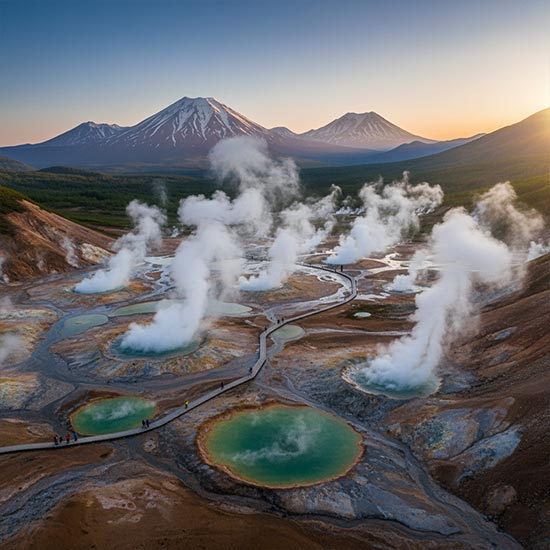
Kamchatka: Russia’s Land of Fire and Ice – Exploring Its Volcanoes
Have you ever dreamt of stepping onto a landscape where the Earth itself feels alive, constantly reshaping itself with fiery eruptions and steaming vents? Welcome to Kamchatka, Russia’s remote and spectacular peninsula, often dubbed the “Land of Fire and Ice.” This isn’t your average tourist destination; it’s a wild, untamed wilderness dominated by an awe-inspiring chain of volcanoes. If you’re an adventurer, a photographer, or simply someone who craves a truly unique and breathtaking natural experience, Kamchatka’s volcanoes will etch themselves into your memory forever.
Why Kamchatka’s Volcanoes Are a Must-See Wonder
Kamchatka is home to over 300 volcanoes, with around 30 of them still active. This incredible concentration of volcanic activity has earned it a well-deserved place on the UNESCO World Heritage list as the “Volcanoes of Kamchatka.” It’s a geological marvel, a place where you can witness the raw power of nature firsthand. Imagine hiking across fresh lava fields, peering into steaming craters, or watching a volcano erupt from a safe distance it’s an experience that truly puts life into perspective.
A Quick Overview: What Makes This Region So Special?
Beyond the sheer number of volcanoes, what truly sets Kamchatka apart is its dramatic juxtaposition of extremes. You’ll find active volcanoes alongside pristine glaciers, lush forests teeming with brown bears, and salmon-filled rivers. It’s a place where the primal forces of creation and destruction coexist in a breathtaking balance. This rugged peninsula remains largely untouched by mass tourism, offering a sense of raw discovery that is increasingly rare in our modern world.
Born of Fire: How Kamchatka’s Volcanic Landscape Was Forged
To understand Kamchatka’s fiery heart, we need to talk about plate tectonics. The peninsula’s existence is a direct result of the immense geological forces constantly at play beneath the Earth’s surface.
The Pacific Ring of Fire: A Tectonic Hotspot
Kamchatka sits squarely on the infamous Pacific Ring of Fire, a horseshoe-shaped zone that encompasses the Pacific Ocean and is characterized by a high frequency of earthquakes and volcanic eruptions. This ring is essentially the world’s most active tectonic boundary, where several major and minor plates are constantly colliding, grinding, and diving beneath one another.
Subduction Zones and Magma Generation
Specifically, the Kamchatka Peninsula is located above a subduction zone, where the Pacific Plate is slowly being forced beneath the Okhotsk Plate (which is part of the larger North American Plate). As the Pacific Plate descends, it melts, and this molten rock (magma) rises to the surface, creating the chain of volcanoes that define Kamchatka. Think of it like a giant conveyor belt, constantly bringing fresh magma to fuel these incredible mountains.
A Constantly Evolving Landscape
Because of this ongoing tectonic activity, Kamchatka is a landscape in perpetual flux. New volcanoes are formed, old ones collapse, and eruptions constantly reshape the terrain. It’s a living geology lesson, a place where you can see the Earth’s internal processes unfolding before your very eyes. This dynamic environment means that every visit to Kamchatka offers a slightly different perspective on its ever-changing volcanic grandeur.
Meet the Giants: Iconic Volcanoes of Kamchatka
While there are hundreds of volcanoes, a few stand out as particularly famous or accessible, each offering its own unique appeal.
Klyuchevskaya Sopka: The Majestic Sentinel
If Kamchatka has a king, it’s undoubtedly Klyuchevskaya Sopka. This towering, perfectly conical stratovolcano dominates the northern part of the peninsula and is an absolute spectacle to behold.
Russia’s Tallest Active Volcano
Rising to an impressive 4,750 meters (15,584 feet), Klyuchevskaya Sopka is not only Kamchatka’s highest peak but also the tallest active volcano in Eurasia. It’s renowned for its frequent and powerful eruptions, often sending plumes of ash thousands of meters into the sky and painting the night with fiery lava flows. Witnessing an eruption from a safe distance is a truly humbling and unforgettable experience.
Avachinsky and Koryaksky: The “Home Volcanoes” of Petropavlovsk-Kamchatsky
As you fly into Petropavlovsk-Kamchatsky, the peninsula’s main city, your gaze will immediately be drawn to the two majestic volcanoes that stand guard over it: Avachinsky and Koryaksky. They are the city’s iconic backdrop, always present, always reminding you of Kamchatka’s fiery nature.
Accessible Giants: A Popular Climbing Destination
Avachinsky volcano (2,741 meters / 9,000 feet) is one of the most accessible and popular climbing destinations. Its relatively moderate difficulty makes it a common goal for trekkers, and the views from its summit, overlooking the Pacific Ocean and the surrounding volcanic landscape, are simply stunning. It offers a fantastic introduction to volcanic trekking.
Mutnovsky and Gorely: Geothermal Wonderland
A bit further south, the Mutnovsky and Gorely volcanoes offer a starkly different, but equally mesmerizing, volcanic experience. This area is a raw, geothermal playground.
Fumaroles, Acid Lakes, and Lunar Landscapes
Mutnovsky volcano is less of a peak and more of a complex crater system, famous for its incredibly active fumaroles (vents emitting steam and gases), bubbling mud pots, and vibrant acid lakes. The ground often steams, and the air carries the scent of sulfur. Hiking here feels like walking on another planet. Nearby Gorely volcano (1,829 meters / 6,000 feet) also features multiple craters, some containing serene lakes and others actively steaming, creating a truly surreal and lunar-like landscape.
Tolbachik: A Landscape of Fresh Lava
Tolbachik volcano (3,682 meters / 12,080 feet) is another powerful and dynamic volcanic complex. It’s a place where you can literally walk on ground that was molten rock just a few years or even months ago.
Recent Eruptions and Geological Beauty
Tolbachik is famous for its “fissure eruptions,” where lava flows from cracks in the ground rather than a central crater. Its major eruptions in 1975-76 and 2012-13 created vast new lava fields, cinder cones, and incredibly intricate lava caves. Exploring these new formations is a unique opportunity to witness the immediate aftermath of volcanic activity, with the black, jagged rock often still warm to the touch. It’s a geological artwork in progress.
Life Flourishes in the Shadows of Giants: Kamchatka’s Unique Biodiversity
Despite the dramatic volcanic activity, Kamchatka is also an ecological powerhouse, home to an incredibly rich and diverse array of flora and fauna. The paradox of life thriving amidst destructive forces is truly inspiring.
From Alpine Tundra to Lush Forests
The peninsula’s diverse climate, ranging from subarctic in the north to temperate in the south, supports a wide variety of ecosystems. You’ll find vast expanses of alpine tundra at higher elevations, giving way to dense forests of birch and larch at lower altitudes, and then to coastal wetlands along the Pacific. This rich mosaic of habitats provides a home for numerous species.
Brown Bears, Salmon, and Steller’s Sea Eagles
Kamchatka is legendary for its wildlife. It boasts one of the highest concentrations of brown bears in the world, particularly in places like Kuril Lake, where they gather in large numbers to feast on the abundant sockeye salmon during the spawning season. Seeing these magnificent creatures in their natural habitat is an unforgettable sight. The skies are patrolled by majestic Steller’s sea eagles, one of the largest and rarest eagles on Earth, while the coastal waters are home to seals, sea otters, and various whale species.
Valley of Geysers: A Geothermal Marvel
No discussion of Kamchatka’s geothermal wonders would be complete without mentioning the Valley of Geysers. This spectacular valley, a UNESCO World Heritage site, is the second-largest concentration of geysers in the world (after Yellowstone). Imagine hot springs, mud pots, and dozens of geysers erupting with clockwork precision, sending columns of superheated water and steam into the air. It’s a truly surreal and vibrant geothermal landscape, a testament to the Earth’s powerful internal heat.
Your Adventure Awaits: Tips for Visiting Kamchatka
Kamchatka is a remote destination, and planning a trip requires careful consideration. But the effort is absolutely worth the reward!
Best Time to Visit and How to Get There
The main tourist season for volcano trekking and wildlife viewing is July and August. This is when the weather is mildest, snow has melted from most trails, and wildlife is abundant. June and September can also be good, but with cooler temperatures and a higher chance of rain or snow.
Getting to Kamchatka typically involves flying into Petropavlovsk-Kamchatsky (PKC), which has direct flights from Moscow and other major Russian cities. There are no roads connecting Kamchatka to the mainland, emphasizing its remote nature.
Guided Tours: Essential for Safe Exploration
Due to the challenging terrain, unpredictable weather, and the need to navigate vast wilderness areas, traveling with a local, reputable guided tour is highly recommended, if not essential. Guides provide vital safety expertise, logistical support (transport, camping, food), and invaluable knowledge about the region’s geology, flora, and fauna. Independent travel is possible but requires significant experience in wilderness survival and expedition planning.
Hiking, Heliskiing, and Hot Springs: Activities for Every Adventurer
Kamchatka offers an incredible array of activities:
- Volcano Trekking: From day hikes on Avachinsky to multi-day expeditions to more remote peaks like Tolbachik.
- Helicopter Tours: For accessing the Valley of Geysers or remote bear-watching spots like Kuril Lake. It’s expensive but an unforgettable experience.
- Heliskiing & Heliboarding: In winter and spring, the untouched slopes of Kamchatka’s volcanoes offer some of the best heliskiing in the world.
- Hot Springs: Relax in numerous natural hot springs after a day of adventuring, many of which are undeveloped and completely wild.
- Bear Watching: Witness brown bears fishing for salmon, an incredible wildlife spectacle.
- Kayaking/Boating: Explore the coastal areas and learn about marine life.
Respecting the Wild: Safety and Protecting Kamchatka’s Heritage
Visiting Kamchatka is an immense privilege, and it comes with a responsibility to respect its fragile environment and ensure your own safety. Always follow your guide’s instructions, stay on marked trails, and practice Leave No Trace principles. The wilderness here is powerful, and it demands respect. Conservation efforts are crucial to protecting Kamchatka’s unique ecosystems from the threats of climate change, pollution, and increased tourism.
Kamchatka’s Volcanoes: A Raw, Unforgettable Experience
Kamchatka is not a destination for the faint of heart, but for those who seek true adventure and raw natural beauty, it delivers an experience unlike any other. Its volcanoes are a constant reminder of the Earth’s immense power, a dramatic backdrop to a thriving ecosystem of unique wildlife. It’s a place where you can feel connected to the very core of our planet, a journey that challenges your perceptions and leaves you with a profound sense of wonder. If you’re ready to explore a landscape forged by fire and ice, Kamchatka is waiting.
Frequently Asked Questions About Kamchatka’s Volcanoes
1. Is it safe to visit active volcanoes in Kamchatka?
Visiting active volcanoes in Kamchatka is generally safe when done with experienced, certified local guides who are constantly monitoring volcanic activity. Guides know which areas are safe to approach and will cancel or reroute trips if conditions become dangerous. It’s crucial to follow all safety instructions.
2. What is the main airport for Kamchatka, and how do I get there?
The main airport for Kamchatka is Petropavlovsk-Kamchatsky Airport (PKC). The primary way to get there is by flying from Moscow (a 9-hour flight) or other major Russian cities. There are no road or rail links connecting Kamchatka to mainland Russia.
3. Do I need a visa to visit Kamchatka, Russia?
Yes, most foreign nationals require a Russian visa to enter Kamchatka. The visa application process can be complex, so it’s essential to start well in advance and ensure all your documents are in order, often with the help of your tour operator providing invitation letters.
4. What kind of wildlife can I expect to see in Kamchatka?
Kamchatka is famous for its wildlife! You can expect to see a high concentration of brown bears, especially during salmon spawning season. Other common sightings include Steller’s sea eagles, various species of salmon, arctic foxes, marmots, and potentially seals or whales along the coast.
5. Is Kamchatka an expensive destination to visit?
Yes, Kamchatka is generally considered an expensive destination due to its remote location, the need for specialized tours (often involving helicopter transfers), and limited infrastructure. Flights, guided expeditions, and accommodation can add up quickly. However, the unique and unforgettable experience is often considered well worth the investment by those who visit.