

Anna Karenina Tolstoy Summary
A Comprehensive and Complete Summary of Anna Karenina
Have you ever picked up a book and felt like you were holding a whole world in your hands? That’s what reading Leo Tolstoy’s masterpiece, “Anna Karenina” feels like. It’s more than a story about a woman who leaves her husband for a lover; it’s an entire universe of human emotion, moral complexity, and social commentary. The novel’s famous opening line, “All happy families are alike; each unhappy family is unhappy in its own way,” sets the stage for a sprawling tale that explores the messy, beautiful, and often tragic realities of life. If the sheer size of this Russian epic has you feeling a bit daunted, don’t worry. We’re here to guide you through its intricate plot and powerful themes, showing you exactly why this 19th-century novel still speaks to us today.
The Timeless Allure: Why Anna Karenina Still Resonates
So, why should you care about a book written in the 1870s? Because its core themes are truly timeless. It’s a profound exploration of love, jealousy, societal hypocrisy, and the search for a meaningful life. Tolstoy doesn’t just tell you a story; he invites you to live alongside his characters, to feel their joy, their pain, and their confusion. The novel acts as a mirror, reflecting our own struggles with morality, happiness, and the choices that define us. It’s a book that asks big questions and offers no easy answers, which is exactly what makes it so enduringly powerful.
The Russian Context: Society, Morality, and the 19th Century
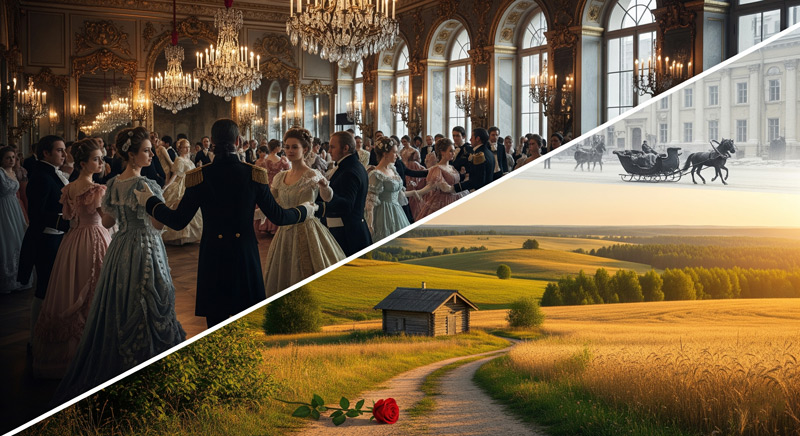
“Anna Karenina” is set in the 1870s in Imperial Russia, a period of great social change. The rigid aristocracy, with its strict rules of conduct and appearance, is still in power, but new ideas are bubbling beneath the surface. The novel contrasts the decadent, often hypocritical life of Moscow and St. Petersburg high society with the simple, more natural existence of rural life. This backdrop is crucial because it’s the very structure that dictates the tragic choices made by our main characters.
The Main Characters: A Guide to the Key Players
The novel is often thought of as a single love story, but it’s actually a dual narrative. One story follows the tragic path of Anna, while the other tracks the more hopeful journey of Konstantin Levin. Understanding these key figures is essential.
The Karenins: Anna and Alexei Alexandrovich
Anna’s Passionate Search for Freedom
Anna Arkadyevna Karenina is a beautiful, intelligent, and vibrant woman trapped in a loveless marriage to an older, high-ranking government official. She is the epitome of passion and a fierce desire for authenticity. Her affair with Vronsky isn’t just a physical act; it’s a desperate cry for emotional and personal liberation from a life of suffocating decorum and duty. Her tragic journey is a powerful commentary on a society that would rather see a person’s spirit crushed than their rules bent.
Alexei’s Rigid Pursuit of Decorum
Alexei Alexandrovich Karenin is Anna’s husband. He’s a man of principle and intellect, but he is completely devoid of emotional warmth. He lives by a strict code of conduct and is obsessed with public opinion and his own reputation. He represents the cold, impersonal nature of the St. Petersburg bureaucracy. His inability to offer Anna genuine love or forgiveness is a central reason for her downfall.
Levin and Kitty: A Path to Rural Serenity
Levin’s Philosophical and Spiritual Journey
Konstantin Dmitrich Levin is often considered Tolstoy’s alter ego. He is a passionate, awkward, and deeply philosophical landowner. Disgusted with the superficiality of Moscow society, he retreats to his country estate. Levin is constantly searching for meaning in life, contemplating everything from agricultural reform to the existence of God. His story is a parallel narrative to Anna’s, offering a path to happiness found not in societal approval, but in nature, honest work, and a genuine spiritual connection.
Kitty’s Transition from Society to Serenity
Ekaterina Alexandrovna Shcherbatskaya, known as Kitty, is a young, beautiful socialite at the beginning of the novel. She is initially torn between the dashing officer Vronsky and the more serious Levin. After being rejected by Vronsky, she falls ill and undergoes a spiritual crisis. Her eventual marriage to Levin and her transition to a simple life on the farm represents the novel’s hopeful, alternative path to happiness.
Vronsky: The Impulsive Officer
Count Alexei Kirillovich Vronsky is a wealthy, handsome, and charming officer. He is a man of action and passion, but lacks the deep philosophical soul of Levin. His love for Anna is sincere, but he is ultimately unprepared for the profound social consequences of their affair. He represents the kind of empty, passionate life that, without a moral foundation, can lead to ruin.
Part 1-4: The Seed of Tragedy and the Promise of Love
The novel opens with the dramatic events that set everything in motion.
Part I: A Tale of Two Couples and a Spark of Passion
The story begins in Moscow with the unhappy family of Anna’s brother, Stiva Oblonsky, who has been unfaithful to his wife, Dolly. Anna travels to Moscow to help reconcile them, and during her visit, she meets Count Vronsky at a ball. There’s an instant, undeniable connection between them. At the same ball, Kitty, who is in love with Vronsky, expects him to propose, but he only has eyes for Anna. This sets the stage for the dual-narrative: Anna’s fateful decision and Kitty’s heartbreak, which eventually leads her back to Levin.
Part II: The Rupture of Society and the Quest for Happiness
Anna returns to St. Petersburg, but Vronsky follows her, and their affair begins in earnest. Their relationship is passionate and all-consuming, but it quickly becomes a source of scandal. Anna is deeply conflicted, caught between her love for Vronsky and her duty to her husband and son. She becomes pregnant with Vronsky’s child, and her husband, Alexei, is finally forced to confront the truth. Meanwhile, Kitty, recovering from her heartbreak, re-encounters Levin, who proposes to her again. This time, she accepts.
Part 5-8: The Unraveling and the Search for Meaning
The novel’s second half explores the consequences of these choices and the characters’ continued search for happiness.
Part III: The Isolation of Anna and the Disillusionment of Vronsky
Anna is now completely ostracized from St. Petersburg society. She gives birth to her and Vronsky’s daughter but becomes increasingly isolated. Vronsky, too, finds that their love, once so thrilling, has become an endless source of conflict. His career is ruined, and their passionate affair becomes a kind of gilded cage.
Part IV: The Finality of Social Condemnation
Anna and Vronsky travel to Italy, hoping to escape the gossip and build a new life together. However, they soon realize they can’t escape their past. Anna feels a deep sense of longing for her son, Sergei, and for a place in respectable society that she can never regain. Their attempt to live a life outside social norms is shown to be impossible in their world.
Part V: Levin’s Struggle with Faith and Family
In stark contrast to Anna’s life, Levin and Kitty’s life together is filled with the simple joys and struggles of country living. Levin continues his search for meaning through philosophy and religion. He grapples with profound questions about life, death, and God, and eventually finds a quiet faith in the simple routines of his life on the farm. His journey represents Tolstoy’s own philosophical and spiritual struggles.
Part VI: The Deepening Divide and the Search for Peace
Anna and Vronsky return to Russia, and their relationship becomes increasingly strained. Anna’s jealousy and paranoia grow, as she feels Vronsky is becoming indifferent to her. Their love, once a source of freedom, has now become a source of profound unhappiness.
Part VII: The Tragic Descent into Jealousy and Despair
Driven by jealousy and despair, Anna’s mental state deteriorates. She is completely isolated, rejected by her old friends, and unable to find peace. She becomes increasingly dependent on Vronsky, but at the same time, her paranoia drives him away. In a final, desperate act, she throws herself under a train, symbolizing her complete destruction by the very forces of passion and society that she fought against.
Part VIII: The Final Reckoning and a Glimpse of Hope
The novel concludes with a brief final part that returns to Levin. He reflects on his life, his family, and his newfound faith. He finally finds a simple, enduring peace, realizing that true happiness isn’t a grand discovery but a quiet, internal acceptance of life’s simple truths. This ending offers a hopeful counterpoint to the tragedy of Anna’s story.
Key Themes: More Than Just a Love Story
“Anna Karenina” is a masterpiece because of its rich thematic layers. Tolstoy explores some of life’s biggest questions with remarkable depth.
Love, Adultery, and the Double Standard
The novel is a searing critique of the societal double standard. While Vronsky, a man, is able to continue his life and career with minimal social repercussions, Anna’s choice leads to her complete ruin. . Tolstoy shows how society judges women with unforgiving harshness, a theme that is still relevant today.
Society vs. the Individual
Anna’s tragedy is a result of her conflict with the rigid rules of society. Her passionate, authentic self cannot exist within the confines of her world. The novel explores the suffocating weight of social expectations and the high price of defying them.
The Pursuit of Happiness: City vs. Country
Tolstoy uses the parallel stories of Anna and Levin to contrast two different paths to happiness. Anna’s story shows the dangers of a life defined by the superficiality of city society, while Levin’s journey demonstrates the profound satisfaction that can be found in a simple, honest life connected to nature and family.
Faith, Philosophy, and the Meaning of Life
Through Levin, Tolstoy delves into deep philosophical questions about faith, meaning, and the human condition. Levin’s spiritual journey is the very heart of the novel, providing a counterpoint to Anna’s worldly and tragic one. He finds that true meaning is not in grand ideas but in the small, daily acts of living.
Conclusion: The Enduring Power of a Masterpiece
“Anna Karenina” is not just a book to be read; it’s a world to be experienced. Its characters are so real that they feel like people you know, and their struggles are so universal that they feel like your own. The novel is a testament to the power of love, the hypocrisy of society, and the enduring human search for meaning and happiness. By understanding its plot and themes, you can unlock the full power of this literary giant and discover why it continues to captivate readers around the world.